

Living in Midtown Miami – Complete Guide to Condos, Lifestyle & Walkable Living (2025)
Midtown Miami represents one of South Florida’s most successful urban planning experiments—a master-planned, mixed-use district where daily convenience meets contemporary residential living. Unlike many Miami neighborhoods that evolved organically over decades, Midtown was intentionally designed in the mid-2000s to create something rare in car-dependent Miami: a truly walkable community where residents can handle groceries, dining, fitness, shopping, and entertainment largely on foot.
Anchored by The Shops at Midtown Miami—an open-air retail center featuring Target, HomeGoods, and essential services—and surrounded by residential towers like Hyde Midtown, Two Midtown, Four Midtown, and Midblock, this compact district delivers urban sophistication without sacrificing pragmatic convenience. Its strategic position between Wynwood‘s creative energy and Edgewater‘s waterfront luxury gives residents immediate access to three distinct lifestyle zones within minutes.
For young professionals, remote workers, small families, and anyone seeking car-lite living with full-service amenities, Midtown Miami offers a compelling alternative to the high-rise density of Brickell or the suburban sprawl of Doral and Weston.
Table of Contents
- Location & Geography
- Getting Around: Walkability & Transit in Midtown Miami
- Lifestyle & Community Vibe
- Real Estate Market: Midtown Miami Condos for Sale
- Dining, Shopping & Entertainment
- Schools & Education
- Accessibility & Commute
- Pros & Cons: Is Midtown Miami Right for You?
- Who Should Live in Midtown Miami?
- Conclusion: Embracing Urban Convenience
- Frequently Asked Questions
Midtown Miami Quick Facts
Location & Geography
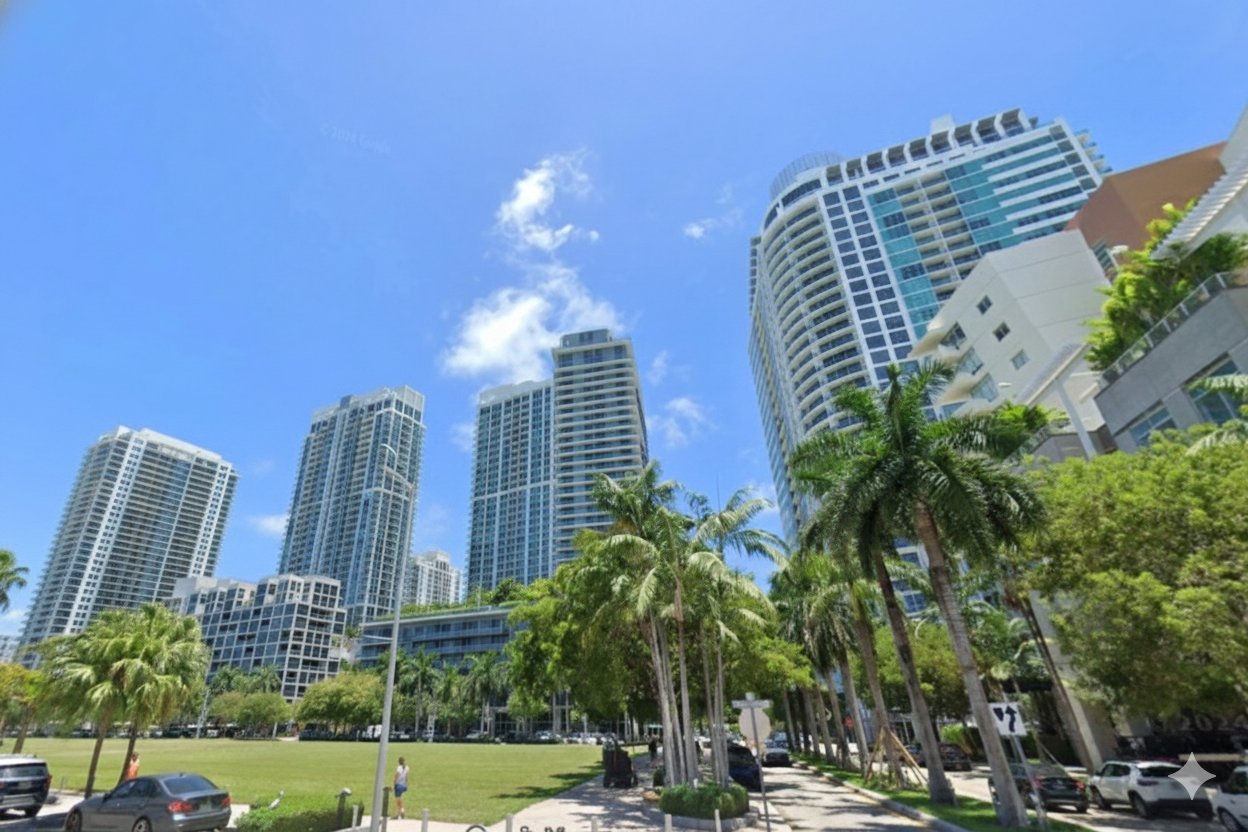
Midtown Miami occupies a rectangular district within the City of Miami, bounded roughly by NE 29th Street to the south, NE 36th/38th Streets to the north, N Miami Avenue to the west, and Biscayne Boulevard/NE 2nd Avenue to the east. The neighborhood sits squarely in ZIP code 33137, placing it within Miami-Dade County.
This geographic positioning is Midtown‘s strategic advantage. To the west lies Wynwood, Miami’s internationally recognized arts district with its famous murals, galleries, breweries, and vibrant nightlife. To the east, Edgewater unfolds along Biscayne Bay, offering waterfront parks, baywalks, and luxury high-rise towers like Missoni Baia, Elysee, and Aria Reserve. Just north, the Miami Design District showcases global luxury retail and chef-driven dining.
The result? Midtown residents live at the nexus of convenience, culture, and luxury—able to walk to Target for groceries, bike to Wynwood Walls for art, and drive five minutes to Margaret Pace Park’s bayfront trails. This strategic location means Midtown residents enjoy multiple lifestyle zones within a 5-10 minute radius.
Major roadways provide excellent connectivity throughout Miami-Dade. Biscayne Boulevard (US-1) runs along the eastern edge, connecting directly to Downtown Miami and Brickell to the south and Aventura to the north. N Miami Avenue on the western boundary offers quick access to I-95, while NE 36th Street leads to I-195 and the Julia Tuttle Causeway for Miami Beach access.
The district’s compact footprint—walkable from end to end in roughly 15 minutes—creates an intimate, neighborhood feel despite being surrounded by major urban corridors. This scale makes Midtown particularly appealing for those downsizing from suburban homes or upsizing from smaller Miami Beach apartments while maintaining lifestyle quality.
Getting Around: Walkability & Transit in Midtown Miami
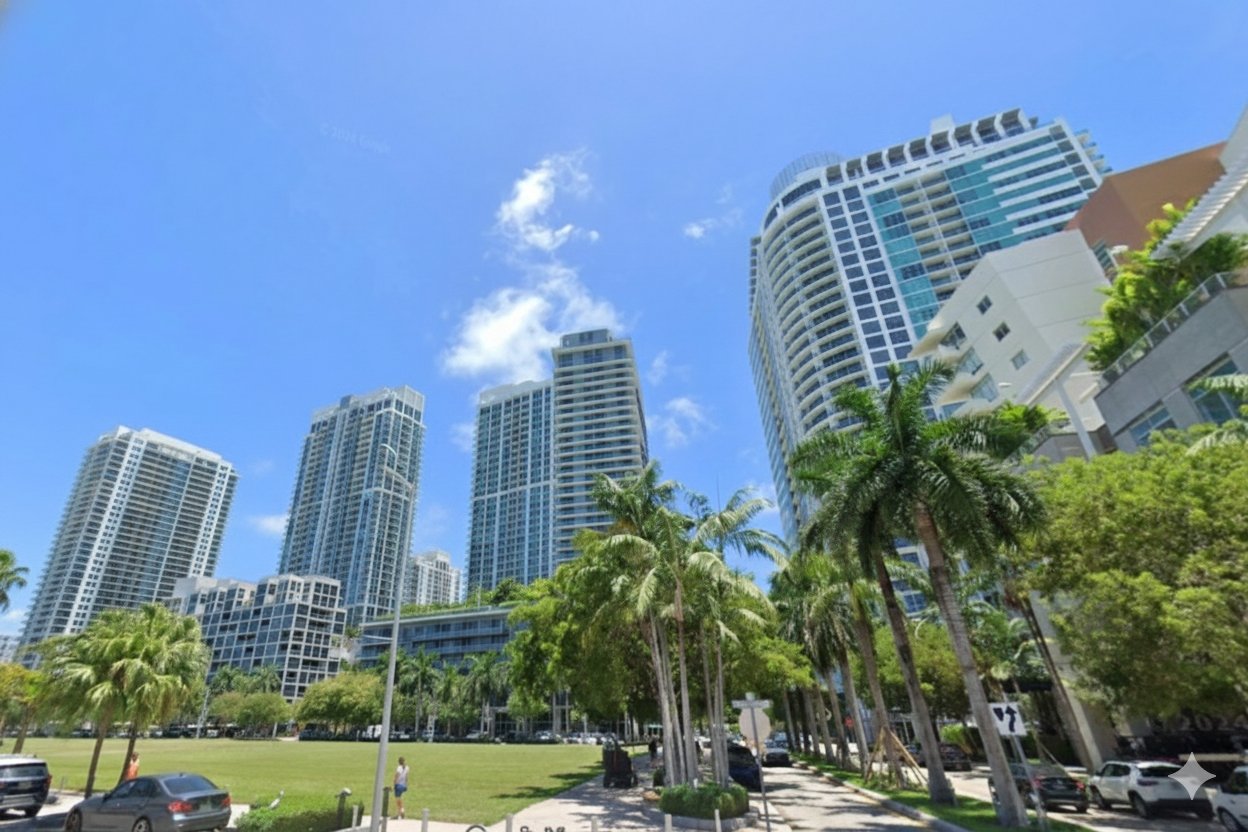
Midtown Miami's defining characteristic is its walkability—a genuine rarity in sprawling South Florida. The district was explicitly designed with wide sidewalks, human-scale blocks, and pedestrian-friendly streetscapes that make walking practical and pleasant.
What You Can Walk To:
Within Midtown's boundaries, residents enjoy pedestrian access to:
- Complete grocery shopping (Target, Publix nearby in Edgewater)
- Big-box retail (HomeGoods, Marshalls, Dick's Sporting Goods, Petsmart)
- Dining and cafés (casual restaurants, coffee shops, quick-service options)
- Fitness studios (yoga, cycling, pilates, HIIT, plus building gyms)
- Personal services (salons, banks, dry cleaning, pet grooming)
- Pocket parks and plazas for outdoor relaxation
- Pharmacies and medical services
This concentration of daily necessities within a 5-10 minute walk creates genuine car-lite living—you can legitimately go days without driving, something nearly impossible in neighborhoods like Coral Gables, Pinecrest, or even parts of Brickell.
Beyond Midtown:
- Wynwood (2-5 minute walk/bike): Art galleries, breweries, food halls, nightlife
- Design District (5-8 minute walk/bike): Luxury shopping, upscale dining, public art
- Edgewater bayfront (5-10 minute walk/bike): Margaret Pace Park, waterfront trails, bay views
- Downtown Miami / Brickell (6-12 minute drive): Business districts, cultural venues, waterfront dining
Transit Options:
While Midtown's walkability reduces car dependency for daily errands, most residents still own vehicles for broader Miami exploration:
- Metrobus: Multiple routes serve the area
- Miami Trolley: Free trolley connections to nearby neighborhoods
- Metromover: Reachable via short bike/scooter trip to Omni/Arts & Entertainment stations
- Brightline: MiamiCentral station is 8-12 minutes by car, offering high-speed rail to Fort Lauderdale, West Palm Beach, and Orlando
- Bike/scooter sharing: Flat terrain and improving infrastructure support cycling
For remote workers or those employed within the Midtown/Wynwood/Design District corridor, commuting becomes nearly irrelevant—a significant lifestyle and financial advantage in traffic-heavy Miami.
Lifestyle & Community Vibe
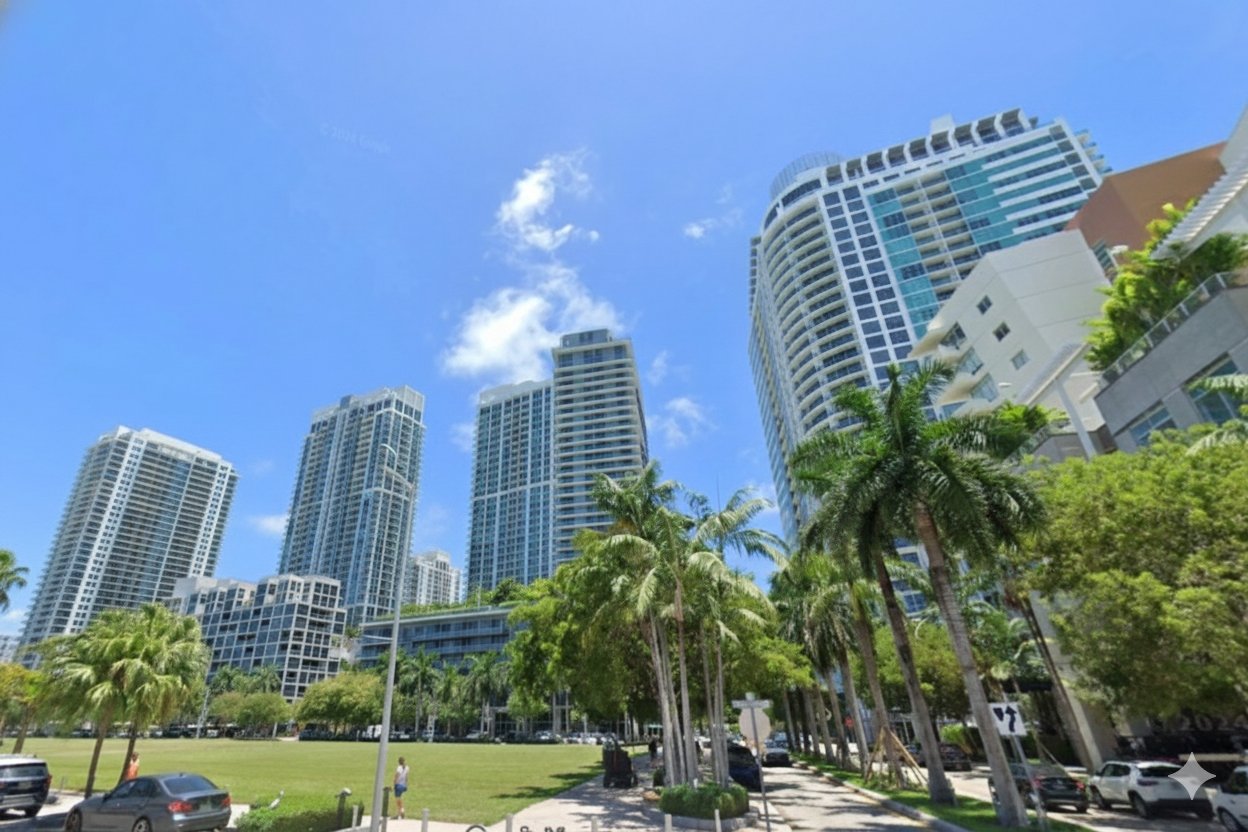
Midtown Miami's lifestyle centers on **convenience-first urban living**. This isn't a neighborhood chosen for beach access like Sunny Isles Beach or Key Biscayne, nor for Mediterranean architecture like Coral Gables. Instead, Midtown appeals to residents who value efficiency, walkability, and having daily necessities steps from their front door.
The Daily Rhythm:
A typical day might begin with morning coffee at a Midtown Boulevard café, followed by a workout at your building's gym or a boutique fitness studio. Afternoons could involve walking to Target for groceries or browsing HomeGoods for home décor. Evenings offer casual dinners at neighborhood restaurants, drinks at Wynwood breweries (a short walk away), or cultural outings to the Design District (minutes north).
Weekends bring even more options: Saturday morning farmers markets in the district, afternoon bike rides to Margaret Pace Park's bayfront trails in Edgewater, and evening gallery openings during Wynwood's Art Walk. The compressed geography means you can experience multiple neighborhood "vibes" without lengthy commutes.
Community Character:
Midtown attracts a specific demographic profile:
- Young professionals (25-40) working remotely or in creative/tech industries
- Small families valuing urban amenities and school access
- Pet owners (the district is notably dog-friendly with multiple pet services)
- Empty nesters downsizing from suburban homes in Pinecrest or Weston
- Seasonal residents seeking lock-and-leave convenience
- International buyers attracted to walkable, full-service living
The atmosphere is decidedly urban-residential rather than resort-style (contrast with Miami Beach) or business-oriented (contrast with Brickell). You'll encounter neighbors walking dogs, jogging through pocket parks, and meeting for casual coffee—a genuine neighborhood feel despite the condo-tower architecture.
Safety & Security:
As a busy retail-anchored district with consistent foot traffic and active street-level uses, Midtown maintains typical urban safety profiles. The concentration of residents, shoppers, and restaurant-goers creates natural surveillance, while building security and lighting infrastructure support resident comfort. As with any urban neighborhood—whether Downtown Miami, Wynwood, or the Design District—standard city awareness remains appropriate.
Pet-Friendly Living:
Midtown stands out among Miami neighborhoods for pet-friendliness. Many buildings welcome dogs (with size/breed restrictions varying by property), and the district offers:
- Multiple pet grooming and veterinary services within walking distance
- Petsmart for supplies and services
- Dog-friendly café patios and outdoor dining areas
- Nearby Margaret Pace Park for longer walks and off-leash areas
- Generally flat, walkable streets ideal for daily dog walking
This concentration of pet amenities makes Midtown particularly attractive for dog owners compared to high-rise-only environments like Brickell where outdoor access can be limited.
Real Estate Market: Midtown Miami Condos for Sale
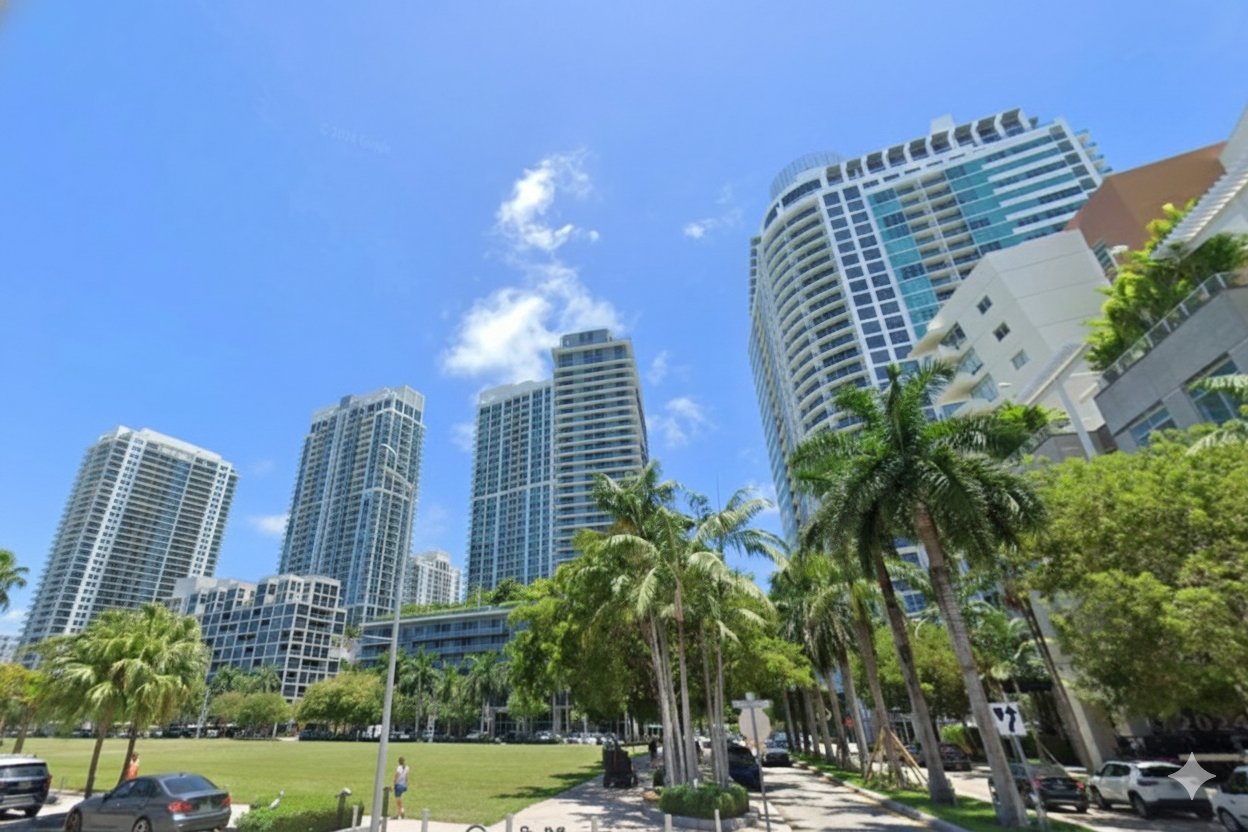
The Midtown Miami real estate market consists almost entirely of **condominiums** and **apartment rentals**, with virtually no single-family home inventory. This pure vertical-living composition distinguishes it from mixed neighborhoods like Coconut Grove or Coral Gables, where single-family homes dominate the market.
Key Residential Buildings:
- Hyde Midtown – Flagship luxury tower with full-service amenities, rooftop pool, spa, and resort-style services
- Two Midtown (Midtown 2) – Established tower with retail podium and convenient building layout
- Four Midtown (Midtown 4) – Similar concept with retail integration and modern amenities
- Midblock at Midtown – Boutique building emphasizing walkability and lifestyle convenience
- Plus various podium-level townhome-style units offering unique layouts
For context, nearby Edgewater towers like Paraiso District, Missoni Baia, and Elysee offer ultra-luxury alternatives with direct bay views, while Wynwood projects like NoMad and Diesel provide industrial-chic options for those prioritizing the arts district vibe.
Price Ranges (2024-2025 Indicative):
- Condo median range: Approximately $600,000–$750,000, depending on building, unit line, and renovation level
- 1-bedroom units: Typically low-$500,000s to mid-$600,000s
- 2-bedroom units: Mid-$700,000s to $1M+, with higher floors and city/partial bay views commanding premiums
- Studios: Available in some buildings, generally high-$400,000s to low-$500,000s
Rental Market:
Midtown's rental demand remains consistently strong due to retail amenities, walkability, and proximity to major employment centers:
- Studio apartments: High-$2,000s to low-$3,000s/month
- 1-bedroom units: $2,800–$3,400/month
- 2-bedroom units: $3,800–$5,200/month
- Days on Market: Typically 30-90+ days; competitively priced units near retail anchors move faster
Market Conditions (2025):
The Midtown market reflects a **balanced to slightly buyer-leaning** environment as of 2025. Metro-wide new supply—particularly in Edgewater and outer Brickell—has increased buyer options, creating opportunities for negotiation on well-maintained but older inventory. However, well-amenitized buildings with strong HOA financial health and desirable unit features (east-facing views, renovated interiors, larger balconies) maintain pricing resilience.
Short-Term Rental Considerations:
Short-term rental feasibility in Midtown is **building-dependent**. While the City of Miami permits STRs with proper licensing (Business Tax Receipt + Certificate of Use + state registration), individual condo associations govern minimum lease terms through bylaws.
Many Midtown buildings require 30-day minimum leases or longer, with some restricting furnished/short-term rental programs entirely. Always verify specific condo documents before purchasing with STR intent—this due diligence is critical for investment strategy.
For comprehensive guidance on buying in Miami or investing in Miami real estate with proper STR analysis, Amarante Real Estate provides expert consultation.
Investment Insights:
From an investor perspective, Midtown offers several advantages:
Strengths:
- Consistent rental demand from young professionals and remote workers
- Walkable daily amenities reduce tenant turnover (renters stay longer)
- Proximity to three high-demand districts (Wynwood, Design District, Edgewater)
- Gross yields generally 3-5% depending on purchase price and HOA costs
- East-facing units with partial bay/city views command rental premiums
Considerations:
- Building-specific lease restrictions may limit STR strategies
- HOA reserves and Florida insurance costs affecting carrying expenses
- Competition from nearby new construction in Edgewater and Wynwood
- Days on Market can extend during high-inventory periods
Recommended Strategy:
Focus on buildings with strong amenities (pools, gyms, social spaces), units with desirable views (east-facing toward bay or city skyline), and properties allowing flexible lease terms if pursuing rental income. Buildings near The Shops at Midtown anchor maintain steadier demand.
Dining, Shopping & Entertainment
Midtown Miami's dining and shopping scene prioritizes daily convenience over destination experiences—though the district's proximity to Wynwood and the Design District means world-class options are minutes away.
The Shops at Midtown Miami:
This open-air retail center forms Midtown's commercial heart, offering:
Big-Box Anchors:
- Target – Full grocery selection, home goods, pharmacy, Starbucks
- HomeGoods – Home décor and furnishings
- Marshalls – Clothing and accessories at value prices
- Dick's Sporting Goods – Athletic gear and equipment
- Petsmart – Pet supplies, grooming, veterinary services
Services & Dining:
- Banks and financial services
- Salons and personal care
- Medical and dental offices
- Casual dining restaurants
- Coffee shops and quick-service options
This concentration of daily-needs retail within walking distance creates lifestyle convenience unmatched by most Miami neighborhoods. Compare this to Brickell, where residents often drive to Whole Foods or Publix, or Miami Beach, where comprehensive shopping requires trips off-island.
Dining Scene:
Midtown's restaurant landscape blends neighborhood casual dining with quick access to culinary destinations:
Within Midtown:
- Casual American, Latin, and international restaurants
- Coffee shops and café culture along Midtown Boulevard
- Quick-service and fast-casual options
- Bar and lounge venues for evening socializing
Minutes Away:
- Wynwood (2-5 minute walk): Craft breweries, food halls, trendy restaurants, art-district bars
- Design District (5-8 minute walk): Chef-driven fine dining, luxury retail cafés, upscale lounges
- Edgewater (5-10 minute walk): Waterfront restaurants and bay-view dining
This geographic positioning means Midtown residents enjoy neighborhood convenience for weeknight dinners while maintaining immediate access to Miami's top culinary destinations for special occasions—best of both worlds.
Entertainment & Nightlife:
Midtown itself offers moderate entertainment options—neighborhood bars, lounges, and cinema experiences. However, the real advantage is proximity:
- Wynwood Walls and galleries for art walks and cultural events
- Wynwood breweries and nightlife for weekend socializing
- Design District events including fashion shows, auto exhibitions, and Art Basel programming
- Downtown Miami and Brickell for broader entertainment (15 minutes)
- Miami Beach for beach clubs and South Beach nightlife (15 minutes via causeway)
For entertainment seekers, Midtown functions as an ideal home base—quiet enough for comfortable residential living, yet positioned for quick access to Miami's major nightlife and cultural zones.
Schools & Education
Midtown Miami serves primarily young professionals and small families rather than school-age family households, but educational options exist for residents with children.
Public Schools:
School assignments depend on specific addresses within ZIP code 33137. Commonly referenced schools include:
- Morningside K-8 Academy – Frequently mentioned for Midtown addresses
- Miami-Dade magnet programs – Competitive admission opportunities including:
- iPrep Academy (technology-focused)
- Design & Architecture Senior High (DASH) – Located in the nearby Design District, one of the nation's premier magnet programs for creative students
Parents should verify exact zoned schools through Miami-Dade County Public Schools and apply early for competitive magnet programs, which offer specialized curricula and enhanced resources.
Private Schools (Within 10-25 Minutes):
- Cushman School (Upper Eastside) – PK-8 independent education
- Centner Academy (Edgewater/Wynwood boundary) – Alternative educational model emphasizing student-led learning
- Miami Country Day School (North Miami) – Comprehensive PK-12 with strong academics and athletics
- Ransom Everglades (Coconut Grove) – Elite college prep, grades 6-12
- Carrollton School (Coconut Grove) – All-girls Catholic college prep
- Gulliver Schools (multiple campuses) – Comprehensive PK-12 programs
Midtown's central location means most private school commutes remain under 20 minutes, making morning drop-offs manageable for working parents.
Higher Education:
- Miami Dade College – Wolfson Campus in Downtown Miami (10 minutes)
- University of Miami – Coral Gables campus (20 minutes)
- Florida International University – Multiple campuses accessible
- Art and design institutes near Wynwood and Design District
For families prioritizing top-rated public schools as a primary factor, neighborhoods like Pinecrest, Coral Gables, or Weston may offer stronger public school performance. However, Midtown's access to quality magnet programs and convenient private school commutes makes it workable for many families, especially those who also value urban lifestyle amenities.
Accessibility & Commute
Midtown Miami's central position within Miami-Dade creates exceptional connectivity to the region's major employment, cultural, and transportation hubs.
Major Roadway Access:
- Biscayne Boulevard (US-1): Direct north-south artery connecting to Downtown Miami, Brickell, Aventura, and Fort Lauderdale
- I-95: Accessible via N Miami Avenue (west boundary) for north-south regional travel
- I-195/Julia Tuttle Causeway: Quick access to Miami Beach and barrier islands
- Venetian Causeway: Alternative beach route via Edgewater
Commute Times from Midtown (Non-Rush):
- Downtown Miami: 6-12 minutes
- Brickell: 8-14 minutes
- Miami Beach (South Beach): 12-18 minutes
- Aventura: 20-25 minutes
- Coral Gables / University of Miami: 18-25 minutes
- Doral: 25-30 minutes
- Fort Lauderdale: 35-50 minutes
- Miami International Airport (MIA): 15-20 minutes
- Fort Lauderdale Airport (FLL): 40-55 minutes
Rush Hour Considerations:
Like all Miami neighborhoods, rush hour significantly impacts commute times—particularly southbound to Brickell / Downtown in mornings (7-9am) and northbound returns in afternoons (5-7pm). Midtown residents commuting to these business districts should anticipate 20-35 minute drives during peak hours.
However, for those working remotely, in Wynwood's creative sector, or within the Design District's retail/hospitality industries, commuting becomes largely irrelevant—a major lifestyle advantage.
Public Transportation:
While most Midtown residents own cars for broader Miami exploration, the neighborhood offers decent public transit access:
- Metrobus: Multiple routes serving Midtown and connecting to Metrorail
- Miami Trolley: Free service connecting to nearby neighborhoods
- Brightline Station: MiamiCentral is 8-12 minutes away, offering high-speed rail to Fort Lauderdale, West Palm Beach, and Orlando—ideal for weekend getaways or airport alternatives
- Metromover: Reachable via short bike or scooter ride to Omni or Arts & Entertainment District stations for free Downtown access
Bike & Scooter Friendliness:
Midtown's flat terrain, wide sidewalks, and relatively human-scale blocks make cycling practical for neighborhood trips and short commutes to Wynwood, Design District, or Edgewater. Bike/scooter sharing programs operate throughout the area, and many buildings include bike storage.
Pros & Cons: Is Midtown Miami Right for You?
✓ Pros
- Exceptional walkability for Miami – Daily needs (groceries, retail, dining, services) genuinely accessible on foot
- Car-lite living – Unique ability to reduce car dependency for everyday errands
- Central location – Minutes to Wynwood, Design District, Edgewater, Downtown Miami, Brickell, Miami Beach
- Target and big-box retail – Rare convenience among urban Miami neighborhoods
- Pet-friendly environment – Multiple pet services, dog-friendly buildings, nearby parks
- Full-service condo amenities – Pools, gyms, concierge, rooftop spaces (building-dependent)
- Remote-work friendly – Neighborhood amenities reduce need to venture far for daily life
- Strong rental demand – Consistent tenant interest due to convenience and location
- Airport proximity – 15-20 minutes to MIA, reasonable FLL access
- Cultural access – Walk to Wynwood art scene, Design District luxury, Edgewater waterfront
✗ Cons
- Limited inventory variety – Nearly 100% condos/apartments; no single-family home options
- Building-dependent STR rules – Many condos restrict short-term rentals, limiting investor strategies
- Not beachfront – Miami Beach, Sunny Isles, Key Biscayne offer direct ocean access (15+ minutes away)
- Urban density – High-rise living may not appeal to those seeking space and privacy
- HOA and insurance costs – Florida condo market challenges affect carrying expenses
- Competition from new supply – Nearby Edgewater towers offer newer, more luxurious alternatives
- Public school variability – Not a top public school district; families often opt for private education
- Limited true "neighborhood" feel – More transient than established residential areas like Coral Gables or Coconut Grove
- Parking constraints – Some buildings have limited parking; street parking challenging
- Rush hour commutes – Travel to Brickell / Downtown can extend significantly during peak hours
Who Should Live in Midtown Miami?
Midtown Miami appeals to specific lifestyle priorities and resident profiles:
Ideal Residents:
- Young professionals (25-40) prioritizing convenience, walkability, and low-maintenance living
- Remote workers who can minimize commuting and maximize neighborhood amenities
- Pet owners seeking dog-friendly buildings and walkable pet services
- Empty nesters downsizing from suburban homes in Pinecrest, Weston, or Coral Gables
- Small families valuing urban amenities and magnet school access
- Seasonal residents wanting lock-and-leave convenience and full-service buildings
- First-time buyers seeking manageable condo living in a vibrant urban district
- Investors targeting steady rental demand from young professional tenants
- Car-lite enthusiasts who want to minimize driving for daily errands
- Culture seekers who value proximity to Wynwood, Design District, and Edgewater destinations
Less Ideal For:
- Families prioritizing top-rated public schools and extensive outdoor spaces
- Beachfront lifestyle seekers (Miami Beach, Sunny Isles Beach, Key Biscayne are better fits)
- Those wanting single-family homes with yards (Coral Gables, Coconut Grove, Pinecrest)
- People seeking absolute quiet and privacy (high-rise density creates some ambient noise)
- Luxury buyers wanting cutting-edge architecture (Edgewater newer towers, Brickell supertalls)
- Short-term rental investors (building restrictions limit strategies)
- Those uncomfortable with urban density and condo living
Conclusion: Embracing Urban Convenience
Midtown Miami delivers on its original promise: creating a walkable, mixed-use urban district where daily convenience meets contemporary residential living. In car-dependent South Florida, this achievement remains genuinely distinctive—few neighborhoods offer comparable ability to walk to Target, enjoy neighborhood dining, access pet services, and handle errands without driving.
For young professionals, remote workers, small families, and anyone seeking car-lite urban living, Midtown presents compelling advantages. The location between Wynwood's creative energy, the Design District's luxury offerings, and Edgewater's waterfront beauty creates outsized lifestyle reach for such a compact footprint. Add quick access to Downtown Miami, Brickell, and Miami Beach, and Midtown becomes an ideal base for exploring all Miami has to offer.
The real estate market offers variety within its condo-dominated inventory—from full-service luxury at Hyde Midtown to more affordable options in Two Midtown and Four Midtown. While newer Edgewater towers may boast more cutting-edge architecture and direct bay views, Midtown compensates with unmatched daily convenience and neighborhood vibrancy.
For investors, the district's consistent rental demand and central location support steady returns, though building-specific lease restrictions require careful due diligence for those considering short-term rental strategies. The key is selecting buildings with strong amenities, financial health, and flexible policies aligned with investment goals.
Whether you're relocating to Miami from out of state, downsizing from suburban living, or seeking an urban base for seasonal stays, Midtown Miami deserves serious consideration. The neighborhood's evolution continues as tenant mix improves at The Shops and residential renovations keep buildings competitive.
Ready to Explore Midtown Miami Condos?
Whether you're interested in luxury living at Hyde Midtown, seeking value in established buildings like Two Midtown or Four Midtown, or comparing Midtown to nearby neighborhoods like Edgewater, Wynwood, Brickell, or the Design District, Amarante Real Estate provides expert guidance tailored to your needs.
Discover available homes for sale in Miami, explore new constructions in nearby Edgewater towers, or learn more about renting in Miami to experience the neighborhood before committing to purchase.
Contact Amarante Real Estate today to find your perfect Midtown Miami home and embrace walkable urban living in South Florida.
Frequently Asked Questions
Is Midtown Miami a good place to live?
Midtown Miami is an excellent place to live for young professionals, remote workers, and small families who prioritize convenience, walkability, and urban amenities. It offers a unique car-lite lifestyle with Target, retail, dining, and services within a short walk, and is minutes from Wynwood, the Design District, and Edgewater.
What are the best condo buildings in Midtown Miami?
Top Midtown Miami buildings include Hyde Midtown (flagship luxury with full amenities), Two Midtown and Four Midtown (established towers with retail convenience), and Midblock at Midtown (boutique lifestyle building). Building choice depends on budget, desired amenities, and specific unit features.
Are short-term rentals allowed in Midtown Miami condos?
Short-term rental rules are building-dependent in Midtown Miami. While the City of Miami permits STRs with proper licensing, individual condo associations govern minimum lease terms. Many buildings require 30-day or longer minimum leases. Always verify specific condo bylaws before purchasing.
How walkable is Midtown Miami?
Midtown Miami is one of South Florida's most walkable neighborhoods, with Target, HomeGoods, restaurants, cafés, gyms, and services within a 5-10 minute walk. The district was designed for pedestrian convenience, making car-lite living genuinely possible—rare in Miami.
Find Your Dream Home in Midtown Miami
Whether you're searching for a walkable condo near Target, evaluating investment opportunities, or comparing Midtown to nearby neighborhoods, Amarante Real Estate connects you with the finest properties.