

Living in Key Biscayne: Essential Family Island & Luxury Real Estate Guide (2025)
Living in Key Biscayne represents Miami’s pinnacle of family-oriented island luxury. This barrier island village southeast of Brickell and Downtown Miami delivers tranquil streets where golf carts outnumber cars, pristine beaches bookending residential neighborhoods, top-rated schools attracting families from across Miami-Dade, and a tight-knit community where residents know their neighbors. Connected to the mainland via the scenic Rickenbacker Causeway, Key Biscayne maintains island sanctuary character while sitting just 12-20 minutes from Brickell’s financial district and urban amenities.
The Village of Key Biscayne’s real estate market reflects its exclusivity and limited geography. Single-family homes range from $3 million canal properties to $40 million+ bayfront estates with private docks and panoramic water views. Condominium buildings along the oceanfront and village core provide luxury alternatives from $1.2 million to $6 million+, attracting families seeking low-maintenance living and international buyers valuing resort-style amenities. The island’s constrained supply—bounded by Crandon Park to the north and Bill Baggs Cape Florida State Park to the south with no expansion possible—supports property values and creates seller-advantaged market dynamics.
This comprehensive guide explores everything about living in Key Biscayne—real estate from waterfront estates to family condos, lifestyle centered on beaches and outdoor recreation, educational excellence through Key Biscayne K-8 Center and mainland private schools, accessibility via the Rickenbacker Causeway, investment considerations including strict short-term rental regulations, and honest assessments helping you determine if this exclusive island community aligns with your South Florida family vision.
Table of Contents
- Location & Geography
- Getting Around: Walkability & Island Living
- Lifestyle & Culture: Island Family Living
- Real Estate Market: From Bayfront Estates to Family Condos
- Schools & Education
- Dining & Entertainment
- Parks & Recreation
- Pros & Cons of Living in Key Biscayne
- Who Should Live in Key Biscayne?
- Conclusion
- Frequently Asked Questions
Key Biscayne Quick Facts
Location & Geography
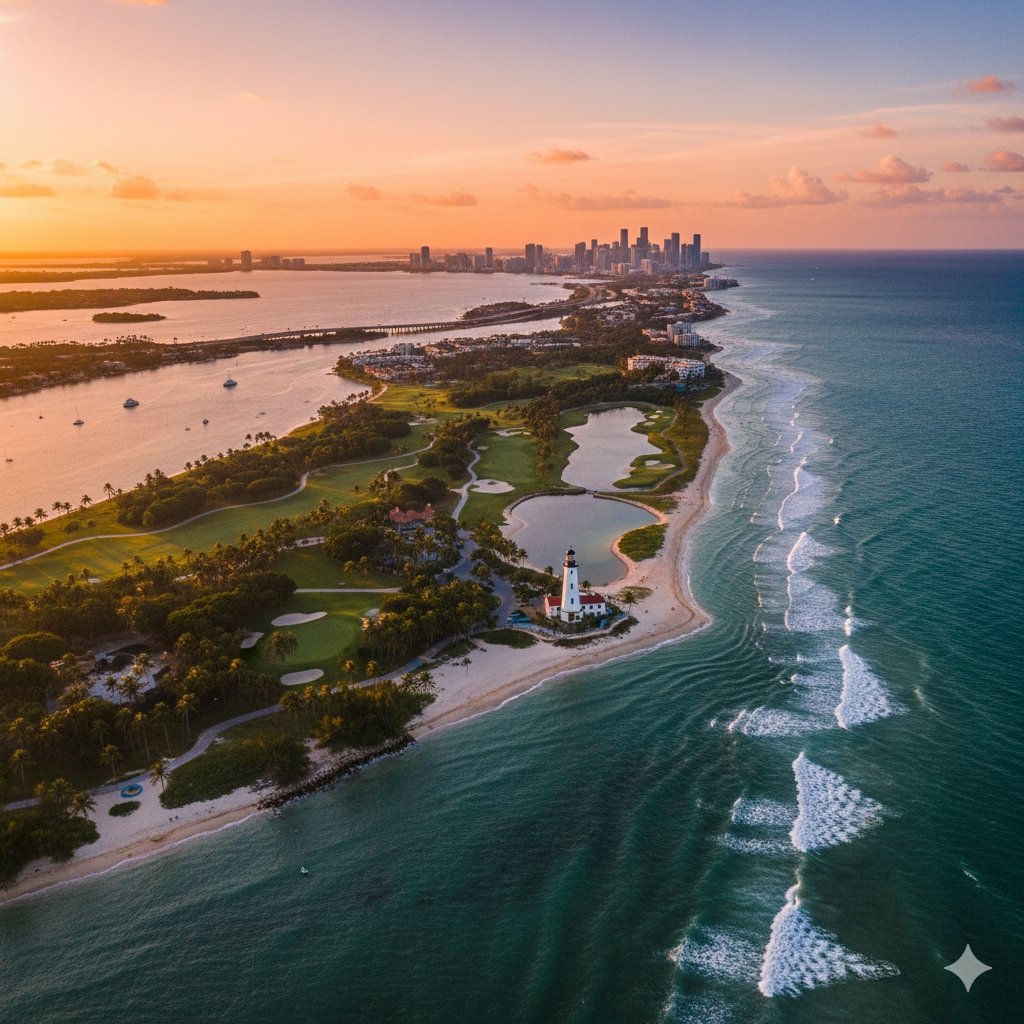
Key Biscayne’s island geography creates both advantages and constraints defining the living experience. The barrier island extends approximately 5 miles north to south but spans less than a mile at its widest point, creating intimate scale where residents traverse the entire island quickly by golf cart or bicycle.
The Rickenbacker Causeway provides sole vehicular access to the mainland, connecting Key Biscayne to Brickell and downtown Miami via a scenic route across Biscayne Bay. This single-access point creates both convenience—quick commutes to urban employment—and vulnerability—traffic backups during peak hours or causeway incidents affect all island residents simultaneously.
The causeway journey itself enhances daily life rather than feeling like a burden. The elevated roadway provides panoramic bay views, passes Virginia Key with its beaches and parks, crosses the Miami Seaquarium, and features dedicated bicycle paths enabling car-free mainland access for recreational cyclists. Morning commutes across the causeway showcase sunrise over the Atlantic and Biscayne Bay, transforming routine drives into scenic experiences.
Crandon Park occupying the northern island section functions as an enormous buffer between the village and mainland development. This 800+ acre park provides beaches, tennis facilities (home of Miami Open), golf course, nature center, and protected mangrove areas creating natural separation enhancing the island’s sanctuary character.
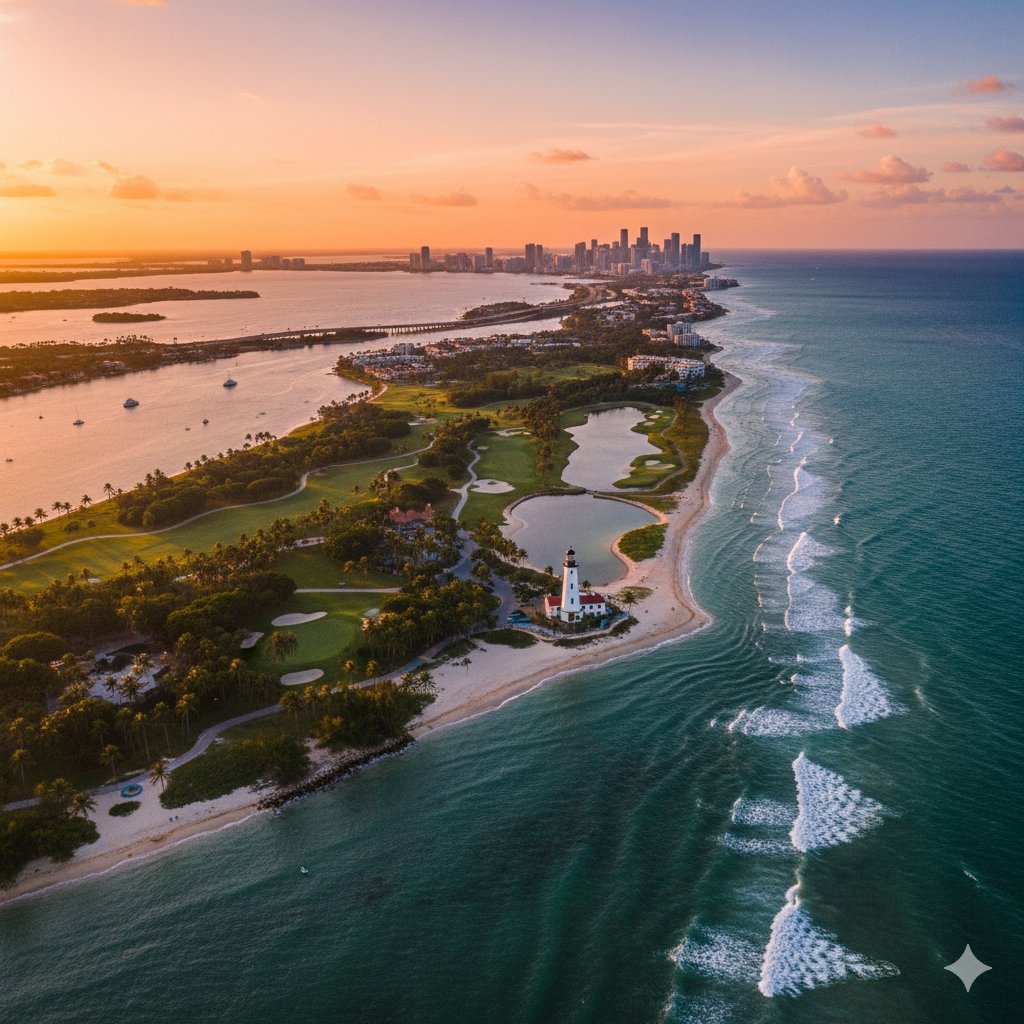
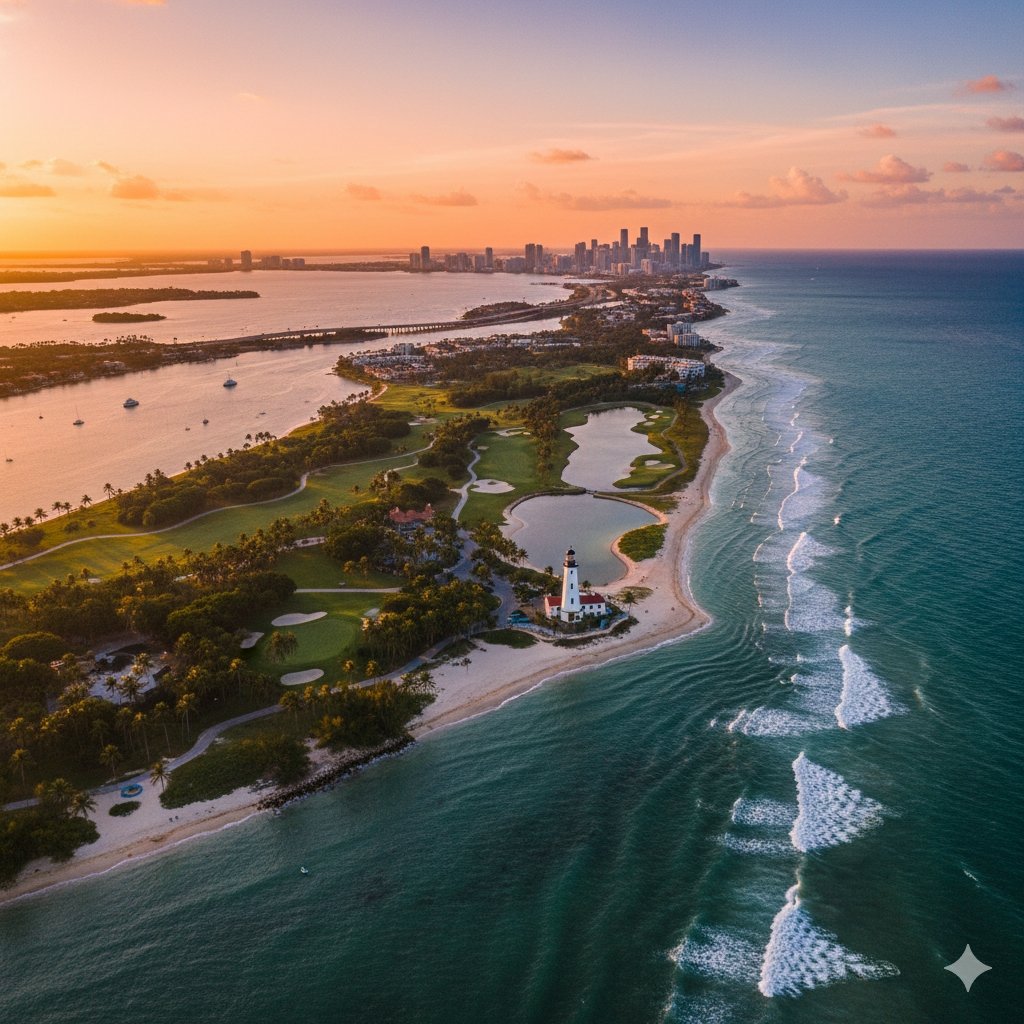
Bill Baggs Cape Florida State Park at the southern tip offers 400+ acres of coastal park with the historic lighthouse, pristine beaches, coastal dunes, and nature trails. These two large parks bookending residential areas create unmatched public space access—residents live minutes from world-class beach and recreation facilities without country club membership requirements.
The residential core between the parks concentrates along Crandon Boulevard (the main north-south spine) and perpendicular streets extending east toward the ocean and west toward the bay. Single-family homes cluster in interior neighborhoods and along waterfront lots, while low-rise condominium buildings concentrate near the village center and oceanfront.
The compact geography creates exceptional walkability and bikeability within the island. Residents bicycle to the beach, walk to village center restaurants and shops, golf-cart to friends’ homes for dinner, and access parks via dedicated paths—reducing car dependency for local trips despite island location.
Positioning between downtown Miami (12-20 minutes), Coral Gables (20-25 minutes), Coconut Grove (15-20 minutes), and Miami International Airport (20-30 minutes) provides convenient access to employment, culture, healthcare, and travel while maintaining the island’s removed, peaceful character. This proximity distinguishes Key Biscayne from truly remote islands requiring extended travel for basic services.
Getting Around: Walkability & Island Living
Living in Key Biscayne delivers exceptional walkability and micro-mobility within the island, creating lifestyle advantages rare in car-dependent South Florida.
Village Walkability
The compact village center along Crandon Boulevard concentrates restaurants, cafés, ice cream shops, grocery stores, pharmacies, banks, dry cleaners, salons, and essential services within walkable distances. Families walk to breakfast, children bike to friends' homes, and residents handle errands on foot or by golf cart for purely local needs.
Wide, maintained sidewalks throughout residential neighborhoods encourage walking and jogging. The island's flat terrain, abundant tree canopy, and calm traffic create family-friendly pedestrian environments where parents feel comfortable with children walking or biking independently—a significant quality-of-life advantage increasingly rare in suburban environments.
Village Green Park serves as the central recreation hub within walking distance for many residents. The park features sports fields, playgrounds, basketball courts, and open spaces supporting youth leagues, pick-up games, and community gatherings. This centrality eliminates the need to drive children to practices or weekend games as in sprawling suburban communities.
Golf Cart Culture
Key Biscayne's golf cart culture defines the island lifestyle. Residents use golf carts for local trips—visiting neighbors, running quick errands, beach trips, restaurant outings—reducing car usage while maintaining mobility. The practice creates resort-like ambiance, slows traffic speeds enhancing safety, and fosters community interaction as neighbors wave while passing.
Many families own golf carts in addition to regular vehicles, using cars primarily for causeway trips to the mainland while golf carts handle island circulation. This dual approach maximizes convenience while minimizing environmental impact and maintaining the relaxed island atmosphere residents cherish.
Cycling Infrastructure
Dedicated bicycle paths connect residential neighborhoods to Crandon Park, Bill Baggs Cape Florida State Park, and village amenities. The paths enable safe cycling for all ages, supporting morning beach rides, afternoon park visits, and recreational exercise integrated into daily routines.
The Rickenbacker Causeway features separated bicycle paths enabling car-free mainland access for serious cyclists and outdoor enthusiasts. Weekend mornings bring cycling groups, triathletes training, and recreational riders enjoying the scenic bay crossing. This infrastructure supports active lifestyles and provides alternatives to driving for fitness-oriented residents.
Transportation to Mainland
Despite internal walkability, car ownership remains essential for Key Biscayne residents requiring regular mainland access. Commuting to Brickell offices, shopping at major retail centers, attending mainland private schools, or accessing medical specialists necessitates vehicles.
Rideshare services (Uber, Lyft) operate to and from Key Biscayne, providing alternatives for airport trips, downtown nights out, or situations where driving isn't practical. However, the island location and causeway crossing make rideshare costs higher than similar distances within mainland neighborhoods.
Public transit options remain limited. Broward County Transit buses serve the causeway route connecting Key Biscayne to mainland transit hubs, but frequency and schedules don't suit most professionals' commute patterns. The village's demographic profile skews toward car ownership with public transit serving primarily service workers and budget-conscious residents.
Commute Times & Access
The Rickenbacker Causeway creates predictable commute patterns. Typical non-rush travel times from Key Biscayne include Brickell and Downtown Miami at 12-20 minutes, Coconut Grove at 15-20 minutes, Coral Gables at 20-25 minutes, Miami International Airport at 20-30 minutes, Miami Beach at 20-30 minutes via causeways, Aventura at 35-45 minutes, and Fort Lauderdale-Hollywood International Airport at 40-60 minutes.
Rush hour impacts causeway traffic, with morning outbound (toward mainland) and evening inbound (returning to island) experiencing congestion adding 10-20 minutes to typical travel times. However, the causeway's limited access points mean traffic flows more predictably than complex mainland highway networks—residents learn timing patterns and adjust departure schedules accordingly.
The single-causeway dependency creates vulnerability during incidents—accidents, construction, or special events can create significant delays. However, the scenic crossing, reliable patterns once learned, and limited alternatives mean residents accept this trade-off for island living benefits.
Lifestyle & Culture: Island Family Living
Living in Key Biscayne centers on outdoor recreation, family activities, and community cohesion creating distinctive lifestyle character.
Beach & Park Lifestyle
Crandon Park Beach consistently ranks among America's finest beaches—soft white sand, calm bay waters safe for children, abundant parking, restrooms, showers, concessions, and lifeguards create perfect family beach environments. Residents spend weekends establishing beach camps with umbrellas and coolers, children building sandcastles and swimming, and families picnicking on the sand.
The beach's calm bay waters (versus ocean surf) make it ideal for young children, stand-up paddleboarding, kayaking, and swimming without strong currents or dangerous waves. This safety factor attracts families with multiple young children who prioritize worry-free beach experiences.
Bill Baggs Cape Florida State Park offers alternative beach experience with ocean-side waves, protected dunes, coastal vegetation, and the iconic lighthouse. The park's southern location provides quieter, more natural environments than the developed Crandon Beach, appealing to residents seeking solitude or nature observation.
The park features Lighthouse Café (casual dining with bay views), lighthouse tours providing historical context and panoramic vistas, nature trails through coastal ecosystems, and limited beach access maintaining uncrowded conditions. Weekend afternoons see families biking to the park, climbing the lighthouse, and enjoying sunset views over the bay.
Tennis & Sports Culture
Crandon Park Tennis Center hosts professional tournaments (Miami Open) and provides public courts supporting active tennis community. Residents play regularly, children attend tennis academies, and the sport integrates into social life through club memberships and tournament participation.
Village Green Park anchors youth sports with fields for soccer, baseball, and multi-purpose recreation. The central location enables families to walk or golf cart to practices and games, creating community gathering spaces where parents socialize while children play.
Cycling circuits around the island and on the causeway support training for triathletes, road cyclists, and fitness enthusiasts. The flat terrain and scenic routes create ideal cycling environments attracting serious athletes and recreational riders alike.
Marina & Watersports
Crandon Marina provides boat slips, launching facilities, and access to Biscayne Bay and the Atlantic Ocean. Residents keep boats for fishing, cruising to waterfront restaurants, accessing Biscayne Bay sandbars, and ocean adventures. The boating community creates social networks through yacht club memberships, fishing tournaments, and shared adventures.
Kiteboarding, windsurfing, sailing, kayaking, and stand-up paddleboarding thrive in the bay's protected waters. The island's water access from multiple directions provides options for varying wind conditions and skill levels, supporting active watersports community.
Private docks at waterfront homes enable residents to launch directly from backyards, transforming boating into spontaneous activities rather than requiring marina trips and preparation. This convenience enhances the waterfront lifestyle and supports property value premiums for bayfront estates.
Village Dining & Social Life
The village center along Crandon Boulevard concentrates family-friendly restaurants, cafés, pizza shops, ice cream parlors, and casual dining creating neighborhood gathering spaces. The scene emphasizes approachable, family-oriented establishments over nightlife or fine dining—reflecting the community's demographics and priorities.
Weekend mornings bring families to breakfast spots, afternoon ice cream runs become daily traditions, and early dinner crowds include children and strollers. The atmosphere feels suburban and wholesome rather than sophisticated or trendy, matching residents' preferences for family comfort over urban energy.
For upscale dining, residents drive to Brickell, Coral Gables, Coconut Grove, or Miami Beach (15-30 minutes), treating these as special occasions while appreciating the village's casual everyday options. This separation between daily family life and occasional sophisticated evenings supports the lifestyle many residents seek.
Community Events & Cohesion
Key Biscayne maintains active community life through seasonal events, lighthouse tours, regattas, farmers markets, art festivals, and holiday celebrations. The village's compact geography and engaged population create high participation rates building neighbor relationships and community bonds.
HOA and condominium association networks foster micro-communities within the broader village. Building social events, neighborhood watch programs, and shared amenity management create interconnected residents who collaborate on maintaining quality of life.
The Key Biscayne Community Foundation supports local programs, environmental initiatives, and cultural activities strengthening community fabric. Residents' investment in village governance, schools, and civic organizations reflects long-term commitment rather than transient vacation home mentality.
Safety & Security
Key Biscayne maintains top-tier safety reputation throughout Miami-Dade County. Active policing, community watch networks, engaged residents, and the island's limited access points create secure environments where families feel confident with children's independence.
The village's demographic homogeneity (affluent families), social cohesion (engaged community networks), and geographic isolation (single causeway access) contribute to low crime rates and strong perceived safety. Residents cite security as a primary reason for choosing Key Biscayne over mainland alternatives.
The trade-off for this security includes less diversity, higher costs, and insular character that some find limiting. However, families prioritizing children's safety and community cohesion consistently rank Key Biscayne among Miami's safest residential options.

Real Estate Market: From Bayfront Estates to Family Condos
The Key Biscayne real estate market reflects the island's exclusivity, limited supply, and family-oriented demographics.
Single-Family Homes: Interior & Canal Properties
Non-waterfront and canal single-family homes provide Key Biscayne living at relatively accessible price points (within the island's luxury context). Price ranges typically fall between $3 million to $8 million+ depending on lot size, home size, renovation quality, pool presence, and canal access. Interior homes (no water frontage) start around $3-4 million for dated properties requiring updates, while renovated or newly built homes on larger lots reach $6-8 million+.
Canal properties with boat docks command premiums over interior homes, though canal depths and bridge clearances limit vessel sizes compared to Fort Lauderdale's deepwater communities. These homes appeal to recreational boaters and families wanting water access without bayfront pricing.
Home characteristics include a mix of 1950s-1990s original construction (Mediterranean, ranch, traditional styles) and modern teardown-rebuild projects. Lot sizes typically range 7,500-15,000+ square feet providing yards, pools, and outdoor living spaces valued by families.
Buyers should evaluate renovation quality, flood elevation compliance, pool and outdoor condition, and lot configuration. Many older homes require substantial updates to mechanical systems, kitchens, bathrooms, and outdoor spaces—budget-conscious buyers factor renovation costs into purchase decisions.
Bayfront Estates: Ultimate Waterfront Luxury
Bayfront properties represent Key Biscayne's apex luxury market. Price ranges typically span $12 million to $40 million+ depending on lot width, bayfront footage, dock configuration, elevation, home quality, and views. Wide bayfront lots (75+ feet of water frontage) with modern homes, deep water docks accommodating large yachts, and unobstructed bay views command top pricing.
These estates attract high-net-worth individuals, business executives, international buyers, and families seeking ultimate privacy with resort amenities. The properties feature expansive homes (6,000-15,000+ square feet), infinity pools, outdoor entertainment areas, private docks, and panoramic water views.
The bayfront market prioritizes land and water access over indoor square footage—exceptional waterfront lots support premium pricing even with modest homes, as buyers frequently demolish existing structures to build custom estates. This teardown-rebuild cycle gradually elevates the island's housing quality and property values.
Rental rates for waterfront single-family homes range $10,000 to $30,000+ monthly with seasonal premiums during winter months when northern residents and international visitors seek warm-weather escapes. Some owners avoid long-term rentals, using properties as primary residences or maintaining them for personal seasonal use.
Condominiums & Townhomes: Low-Maintenance Luxury
Condominium and townhome buildings provide Key Biscayne lifestyle without single-family home maintenance. Notable buildings include Oceana Key Biscayne (luxury oceanfront towers with resort amenities, concierge services, and direct beach access), The Ocean Club (established oceanfront building with tennis courts, pools, and beach club), Key Colony (sprawling complex with multiple buildings, pools, tennis, marina access), and various boutique low-rise buildings in village core providing walkability to services.
Price ranges run approximately $1.2 million to $6 million+ depending on building, floor level, ocean views, unit size, and renovation quality. Two-bedroom units start around $1.2-1.8 million, three-bedrooms range $2-4 million, and penthouses or premium ocean-view lines exceed $5-6 million.
Building considerations include reviewing HOA financial health, reserve funds, pending special assessments, amenity quality, and building maintenance. Older buildings may face substantial capital improvement needs affecting assessments and resale values. Newer construction or recently renovated buildings command premiums for modern systems and finishes.
The rental market sees two to three-bedroom condos rent for approximately $6,000 to $15,000+ monthly depending on building quality, floor level, views, and furnishing. Annual leases dominate given the village's strict short-term rental regulations, though seasonal (6-12 month) furnished leases serve relocating professionals and international residents.
Market Conditions & Investment Dynamics
Key Biscayne presents a tight, low-velocity market with limited inventory and owner-occupancy dominance. The single-family home market skews seller-advantaged due to limited land, constrained supply (no expansion possible with parks bookending village), and consistent family demand. Well-priced homes in desirable locations often receive multiple offers or sell within 30-60 days.
Condominiums show more balanced market dynamics with steady luxury condo supply and seasonal demand patterns. Properly priced units in top buildings sell reasonably quickly (30-90 days), while overpriced or compromised units (poor views, lower floors, weak buildings) sit longer requiring price adjustments.
Days on market vary: single-family homes priced competitively move quickly, while condos and townhomes typically market 30-120+ days depending on view lines, building reputation, and pricing strategy.
Investment yields show annual condo rentals typically generating gross yields of approximately 3-5% depending on purchase price, HOA fees, and achievable rents. Single-family homes often produce 3-4% gross yields, with investment thesis centered more on wealth preservation and land scarcity than cash flow optimization.
The island's supply constraints, family demand, proximity to Brickell, and lifestyle amenities support long-term appreciation assumptions despite modest rental yields. Many buyers prioritize quality of life, school access, and capital preservation over maximizing rental income.
Short-Term Rental Regulations
The Village of Key Biscayne enforces strict short-term rental restrictions in residential zones. Sub-30 day rentals are often prohibited in residential zones, condominium bylaws impose minimum lease terms (commonly 3-6 months or longer), commercial hotel zones accommodate short-term stays but residential properties face enforcement, and violations result in fines and legal action.
Due diligence requirements mandate always verifying both village zoning regulations and specific building HOA or condo bylaws before purchasing any property for short-term rental operations. The village actively enforces regulations protecting residential character and preventing residential properties from functioning as de facto hotels.
Schools & Education
Key Biscayne K-8 Center
Key Biscayne K-8 Center serves as the island's public school for kindergarten through eighth grade, consistently ranking among Miami-Dade County's highest-performing schools. The school receives A ratings, delivers strong academic results, maintains engaged parent involvement, and creates tight-knit student communities where children grow up together from elementary through middle school.
The school's excellence eliminates private school necessity for many families during K-8 years, saving substantial tuition costs while providing quality education. The walkable or bikeable location for many island residents enables children's independence and reduces parent transportation burdens.
Class sizes remain reasonable, teachers demonstrate commitment, and the school benefits from affluent community support through PTA fundraising, volunteer programs, and supplemental resources. The combination of public school accessibility with private school-quality results attracts families specifically to Key Biscayne.
High School Options
Key Biscayne lacks a public high school on the island, requiring students to attend mainland schools via causeway commute. Popular options include MAST Academy (maritime-themed magnet school in Coconut Grove with competitive admissions and strong academics), Coral Reef Senior High (traditional public high school serving Key Biscayne with decent academics and athletics), and various Miami-Dade magnet programs (competitive admission schools throughout the county requiring applications and testing).
Many families transition to private schools for high school years. Top choices include Ransom Everglades School (Coconut Grove location, elite college prep, strong academics and athletics), Gulliver Prep (Pinecrest campus, comprehensive private school with robust programs), Palmer Trinity School (Pinecrest, smaller private school with personalized attention), and Carrollton School of the Sacred Heart (all-girls Catholic school in Coconut Grove).
The high school commute (15-25 minutes to most mainland schools) adds logistical complexity requiring parent coordination or student driving once licensed. However, many families accept this trade-off given Key Biscayne K-8's quality and the island's overall lifestyle benefits.
Early Childhood Education
Key Biscayne offers several private preschools and early childhood programs serving island families. Options include St. Christopher's By-The-Sea Episcopal Church preschool (established program with religious affiliation), Key Biscayne Presbyterian Church preschool (faith-based early education), and various private Montessori and play-based programs operating in the village.
Many families also consider mainland preschools in Coral Gables, Coconut Grove, or Pinecrest if they're already commuting for work or planning private school transitions. The causeway crossing makes mainland options reasonably accessible for families comfortable with the drive.
Dining & Entertainment
Village Dining Scene
Key Biscayne's dining scene emphasizes casual, family-friendly establishments concentrated along Crandon Boulevard in the village center. The Rusty Pelican offers upscale waterfront dining with bay views and seafood focus, serving special occasions and date nights. Costa Med provides Mediterranean cuisine in casual-upscale setting popular for family dinners. Novecento serves Argentine steakhouse fare with outdoor seating attracting weekend crowds.
Casual options include Boater's Grill (waterfront casual dining with dockage), Kazumi (sushi and Japanese cuisine), Oasis (Cuban and Latin American comfort food), Donut Gallery (breakfast and coffee institution), and multiple pizza shops, sandwich spots, and ice cream parlors serving quick family meals and afternoon treats.
The village scene prioritizes approachable pricing, family accommodations (high chairs, kids menus), and early dining hours over sophisticated cuisine or nightlife energy. Residents appreciate the convenience for weeknight dinners and weekend breakfasts while accepting limitations for special occasions.
Mainland Dining Access
For upscale dining, diverse cuisines, or sophisticated nightlife, residents drive 15-30 minutes to Brickell, Coral Gables, Coconut Grove, Miami Beach, or Wynwood. This access provides occasional variety while maintaining the island's quiet, family-focused daily character.
The separation between everyday island dining and special occasion mainland restaurants suits many residents' preferences—casual family meals at home or local spots during the week, with weekend or celebration dinners justifying the causeway crossing for memorable experiences.
Entertainment & Nightlife
Key Biscayne offers minimal nightlife or entertainment venues. The village lacks bars, clubs, live music venues, or late-night scenes. Entertainment centers on outdoor recreation, community events, family activities, and home entertaining rather than commercial nightlife.
This absence attracts families seeking quiet evenings and safe streets while deterring singles or young professionals wanting urban energy. Residents requiring nightlife access treat mainland Miami as their entertainment destination, returning to the island's tranquility afterward.
Parks & Recreation
Crandon Park
Crandon Park dominates the island's northern section with 800+ acres of beaches, tennis facilities, golf course, nature center, and protected ecosystems. The park's beach consistently ranks among America's finest with calm bay waters, soft sand, family amenities, and uncrowded conditions compared to Miami Beach.
Crandon Park Tennis Center hosts the Miami Open professional tournament and provides public courts for resident use. The facility supports active tennis community with leagues, lessons, and tournament play integrated into island social life.
Crandon Golf Course offers 18-hole public course with bay views and reasonable rates. The course serves recreational golfers and hosts community tournaments, though serious players often join private clubs on the mainland for championship layouts and exclusive amenities.
The Marjory Stoneman Douglas Biscayne Nature Center provides environmental education, guided tours, and nature programs teaching children and families about coastal ecosystems, marine life, and conservation. The center enhances the island's educational offerings and outdoor learning opportunities.
Bill Baggs Cape Florida State Park
Bill Baggs Cape Florida State Park occupies the island's southern tip with 400+ acres of coastal park featuring the historic Cape Florida Lighthouse (built 1825), pristine beaches with ocean waves, coastal dunes and native vegetation, nature trails through maritime hammock, and Lighthouse Café offering casual dining with bay views.
The park provides quieter, more natural beach experiences than developed Crandon Beach. Families bike to the park for afternoon adventures, climb the lighthouse for panoramic views, explore nature trails, and enjoy sunset picnics on the beach.
The park's limited development and protected status ensure uncrowded conditions and preserved natural character—residents value this accessible wilderness within minutes of home.
Village Green Park
Village Green Park serves as the community's central recreation hub with youth sports fields (soccer, baseball, multi-purpose), basketball courts, playgrounds for multiple age groups, open lawn areas for picnics and informal play, and community event space hosting festivals and gatherings.
The park's central village location enables walking or golf cart access for many families. Weekend mornings bring youth sports leagues, parents socializing while children play, and community interaction building neighborhood bonds.
Additional Recreation
The island offers multiple smaller neighborhood parks and green spaces, beach access points along the eastern shore, Crandon Marina providing boat slips and launching, and extensive bicycle path networks connecting parks and neighborhoods.
This abundance of public recreation space—over 1,200 acres of parks bookending a 1.4 square mile island—creates unmatched access to beaches, sports facilities, and nature without country club memberships or private amenity fees.
Pros & Cons of Living in Key Biscayne
Understanding advantages and limitations helps families make informed decisions about living in Key Biscayne.
✓ Pros
- Top-Tier Safety: Exceptional security through active policing, community networks, and limited access
- Pristine Beaches: Crandon Park and Bill Baggs consistently rank among America's finest beaches
- Excellent Public School: Key Biscayne K-8 Center eliminates private school necessity for many families
- Golf Cart Lifestyle: Unique island culture with low-speed residential character
- Park Access: 1,200+ acres of public parks bookending village create unmatched recreation
- Marina & Boating: Crandon Marina and private docks support active watersports lifestyle
- Family-Friendly: Tight-knit community prioritizing children, safety, and neighborhood cohesion
- Brickell Proximity: 12-20 minute commute to financial district despite island location
- Limited Development: Constrained supply supports property values and prevents overdevelopment
- Walkability: Compact village center and safe sidewalks support pedestrian lifestyle
✗ Cons
- Single Causeway Dependency: One road access creates vulnerability during incidents or rush hour
- High Entry Costs: Real estate starts around $1.2M condos, $3M+ single-family homes
- Limited Dining & Nightlife: Casual family restaurants dominate; sophisticated dining requires mainland trips
- Insular Character: Small island creates limited diversity and potential isolation
- HOA/Condo Fees: Monthly dues ($800-$2,000+) add substantial housing costs
- Hurricane Exposure: Barrier island location faces tropical storm and hurricane risks
- STR Prohibited: Strict rental restrictions prevent vacation rental income strategies
- High Insurance: Coastal location drives elevated property insurance premiums
- Mainland School Commutes: High school and private education require causeway crossing
- Limited Services: Island businesses provide basics; major shopping and medical requires mainland travel
Who Should Live in Key Biscayne?
Living in Key Biscayne makes sense for specific families and individuals whose priorities align perfectly with island offerings.
Ideal for:
Families Prioritizing Schools & Safety: Top-rated K-8 school combined with exceptional security creates ideal child-raising environment for families valuing education and peace of mind above all else.
Beach & Outdoor Enthusiasts: Residents wanting pristine beaches, tennis, cycling, boating, and watersports integrated into daily life rather than weekend escapes find Key Biscayne unmatched.
High-Net-Worth Professionals: Executives and business owners who can afford premium pricing while requiring reasonable Brickell commutes (12-20 minutes) balance work demands with resort lifestyle.
International Families: Bilingual households and expatriates seeking safe, family-oriented environments with international school access and proximity to Miami's global business community.
Empty-Nesters Seeking Active Lifestyles: Retirees wanting outdoor recreation, tennis, golf, boating, and community involvement without large home maintenance choose luxury condos with resort amenities.
Privacy-Conscious Buyers: Families seeking removed, sanctuary environments away from urban density while maintaining accessibility to employment and services.
Waterfront Lifestyle Seekers: Bayfront estate buyers wanting private docks, boat access, water views, and resort-quality outdoor living spaces.
Less Ideal for:
Budget-Conscious First-Time Buyers: Entry costs starting $1.2M+ condos and $3M+ homes exceed most budgets. Explore Doral, Kendall, or Pembroke Pines for affordability.
Singles & Young Professionals: Limited nightlife, family-dominated demographics, and quiet evenings don't serve social lifestyles or career networking. Consider Brickell, Edgewater, or Miami Beach instead.
Car-Free Lifestyle Advocates: Single causeway and mainland dependence for work, shopping, services make car ownership essential. Urban cores offer better car-free viability.
Entertainment Seekers: Minimal dining variety, absent nightlife, and quiet residential character frustrate those wanting urban energy and sophisticated entertainment integrated into daily life.
Diverse Community Seekers: Homogeneous affluent demographics and insular island character lack the diversity and cosmopolitan energy of Brickell, Coral Gables, or Coconut Grove.
Vacation Rental Investors: Strict STR prohibitions eliminate vacation rental strategies. Focus investment on STR-friendly Fort Lauderdale or Hollywood instead.
Conclusion
Living in Key Biscayne represents Miami's ultimate family-oriented island luxury—pristine beaches rivaling Caribbean resorts, top-rated public schools, exceptional safety, and tight-knit community all within 12-20 minutes of Brickell's global business district. The village's constrained geography creating supply scarcity, golf cart culture, and abundant public parks generate lifestyle quality unmatched in metropolitan Miami.
The real estate market reflects this exclusivity: single-family homes from $3 million to $40 million+, luxury condos from $1.2 million to $6 million+, limited inventory, and seller-advantaged dynamics. Buyers must accept premium pricing in exchange for location, lifestyle, and community benefits that money purchases.
Understanding both advantages and limitations ensures realistic expectations. Key Biscayne excels for families with school-age children prioritizing safety and education, outdoor enthusiasts integrating beach and sports into daily life, and high-net-worth individuals seeking sanctuary proximity to urban employment. The island doesn't serve young professionals seeking nightlife, budget-conscious buyers, or investors pursuing vacation rental strategies.
Ready to explore homes for sale in Key Biscayne? Contact Amarante Real Estate to discover properties matching your family's needs—whether seeking bayfront estates with private docks, oceanfront luxury condos in Oceana Key Biscayne, or family homes near Key Biscayne K-8 Center. Our local expertise guides your purchase with current market data, school insights, building analysis, and transaction support ensuring your Key Biscayne journey achieves your South Florida island family vision.
Frequently Asked Questions
Is Key Biscayne good for families?
Yes, Key Biscayne ranks among Miami's best family neighborhoods with top-rated Key Biscayne K-8 Center, exceptional safety, pristine beaches, abundant parks, and tight-knit community prioritizing children and quality of life. The island's golf cart culture, walkable village, and outdoor recreation create ideal environments for raising children.
Are there good schools on Key Biscayne?
Key Biscayne K-8 Center consistently ranks among Miami-Dade's top public schools with A ratings and strong academic performance. High school students attend mainland magnet programs like MAST Academy or private schools including Ransom Everglades and Gulliver Prep via short causeway commutes. Many families find the K-8 quality eliminates private school necessity during elementary and middle school years.
Are short-term rentals allowed in Key Biscayne?
No, Key Biscayne enforces strict short-term rental restrictions. Most residential properties prohibit sub-30 day rentals, and condo bylaws typically require 3-6 month minimum leases. The village actively protects residential character through enforcement, making vacation rental strategies impractical. Always verify both village zoning and specific building bylaws before purchasing for rental purposes.
How much do homes cost in Key Biscayne?
Single-family homes in Key Biscayne typically range from $3 million to $40 million+ depending on waterfront location, lot size, and home quality. Interior and canal homes start around $3-4 million, while bayfront estates reach $12-40 million+. Condos range from $1.2 million to $6 million+ depending on building, floor level, and views. The island's limited supply and family demand support premium pricing.
How far is Key Biscayne from Miami?
Key Biscayne is 12-20 minutes from Brickell and Downtown Miami via the scenic Rickenbacker Causeway during non-rush hours. Miami International Airport is 20-30 minutes away. Coral Gables is 20-25 minutes, and Miami Beach is 20-30 minutes. Rush hour adds 10-20 minutes to commute times. The island location provides sanctuary character while maintaining convenient mainland access for work and services.
Find Your Dream Home in Key Biscayne
Whether you're seeking a bayfront estate, luxury oceanfront condo, or family home near top-rated schools, Amarante Real Estate connects you with Key Biscayne's finest properties.
Living in Key Biscayne: Essential Family Island & Luxury Real Estate Guide (2025)
Living in Key Biscayne represents Miami's pinnacle of family-oriented island luxury. This barrier island village southeast of Brickell and Downtown Miami delivers tranquil streets where golf carts outnumber cars, pristine beaches bookending residential neighborhoods, top-rated schools attracting families from across Miami-Dade, and a tight-knit community where residents know their neighbors. Connected to the mainland via the scenic Rickenbacker Causeway, Key Biscayne maintains island sanctuary character while sitting just 12-20 minutes from Brickell's financial district and urban amenities.
The Village of Key Biscayne's real estate market reflects its exclusivity and limited geography. Single-family homes range from $3 million canal properties to $40 million+ bayfront estates with private docks and panoramic water views. Condominium buildings along the oceanfront and village core provide luxury alternatives from $1.2 million to $6 million+, attracting families seeking low-maintenance living and international buyers valuing resort-style amenities. The island's constrained supply—bounded by Crandon Park to the north and Bill Baggs Cape Florida State Park to the south with no expansion possible—supports property values and creates seller-advantaged market dynamics.
This comprehensive guide explores everything about living in Key Biscayne—real estate from waterfront estates to family condos, lifestyle centered on beaches and outdoor recreation, educational excellence through Key Biscayne K-8 Center and mainland private schools, accessibility via the Rickenbacker Causeway, investment considerations including strict short-term rental regulations, and honest assessments helping you determine if this exclusive island community aligns with your South Florida family vision.
Table of Contents
- Location & Geography
- Getting Around: Walkability & Island Living
- Lifestyle & Culture: Island Family Living
- Real Estate Market: From Bayfront Estates to Family Condos
- Schools & Education
- Dining & Entertainment
- Parks & Recreation
- Pros & Cons of Living in Key Biscayne
- Who Should Live in Key Biscayne?
- Conclusion
- Frequently Asked Questions
Key Biscayne Quick Facts
Location & Geography
Key Biscayne's island geography creates both advantages and constraints defining the living experience. The barrier island extends approximately 5 miles north to south but spans less than a mile at its widest point, creating intimate scale where residents traverse the entire island quickly by golf cart or bicycle.
The Rickenbacker Causeway provides sole vehicular access to the mainland, connecting Key Biscayne to Brickell and downtown Miami via a scenic route across Biscayne Bay. This single-access point creates both convenience—quick commutes to urban employment—and vulnerability—traffic backups during peak hours or causeway incidents affect all island residents simultaneously.
The causeway journey itself enhances daily life rather than feeling like a burden. The elevated roadway provides panoramic bay views, passes Virginia Key with its beaches and parks, crosses the Miami Seaquarium, and features dedicated bicycle paths enabling car-free mainland access for recreational cyclists. Morning commutes across the causeway showcase sunrise over the Atlantic and Biscayne Bay, transforming routine drives into scenic experiences.
Crandon Park occupying the northern island section functions as an enormous buffer between the village and mainland development. This 800+ acre park provides beaches, tennis facilities (home of Miami Open), golf course, nature center, and protected mangrove areas creating natural separation enhancing the island's sanctuary character.
Bill Baggs Cape Florida State Park at the southern tip offers 400+ acres of coastal park with the historic lighthouse, pristine beaches, coastal dunes, and nature trails. These two large parks bookending residential areas create unmatched public space access—residents live minutes from world-class beach and recreation facilities without country club membership requirements.
The residential core between the parks concentrates along Crandon Boulevard (the main north-south spine) and perpendicular streets extending east toward the ocean and west toward the bay. Single-family homes cluster in interior neighborhoods and along waterfront lots, while low-rise condominium buildings concentrate near the village center and oceanfront.
The compact geography creates exceptional walkability and bikeability within the island. Residents bicycle to the beach, walk to village center restaurants and shops, golf-cart to friends' homes for dinner, and access parks via dedicated paths—reducing car dependency for local trips despite island location.
Positioning between downtown Miami (12-20 minutes), Coral Gables (20-25 minutes), Coconut Grove (15-20 minutes), and Miami International Airport (20-30 minutes) provides convenient access to employment, culture, healthcare, and travel while maintaining the island's removed, peaceful character. This proximity distinguishes Key Biscayne from truly remote islands requiring extended travel for basic services.
Getting Around: Walkability & Island Living
Living in Key Biscayne delivers exceptional walkability and micro-mobility within the island, creating lifestyle advantages rare in car-dependent South Florida.
Village Walkability
The compact village center along Crandon Boulevard concentrates restaurants, cafés, ice cream shops, grocery stores, pharmacies, banks, dry cleaners, salons, and essential services within walkable distances. Families walk to breakfast, children bike to friends' homes, and residents handle errands on foot or by golf cart for purely local needs.
Wide, maintained sidewalks throughout residential neighborhoods encourage walking and jogging. The island's flat terrain, abundant tree canopy, and calm traffic create family-friendly pedestrian environments where parents feel comfortable with children walking or biking independently—a significant quality-of-life advantage increasingly rare in suburban environments.
Village Green Park serves as the central recreation hub within walking distance for many residents. The park features sports fields, playgrounds, basketball courts, and open spaces supporting youth leagues, pick-up games, and community gatherings. This centrality eliminates the need to drive children to practices or weekend games as in sprawling suburban communities.
Golf Cart Culture
Key Biscayne's golf cart culture defines the island lifestyle. Residents use golf carts for local trips—visiting neighbors, running quick errands, beach trips, restaurant outings—reducing car usage while maintaining mobility. The practice creates resort-like ambiance, slows traffic speeds enhancing safety, and fosters community interaction as neighbors wave while passing.
Many families own golf carts in addition to regular vehicles, using cars primarily for causeway trips to the mainland while golf carts handle island circulation. This dual approach maximizes convenience while minimizing environmental impact and maintaining the relaxed island atmosphere residents cherish.
Cycling Infrastructure
Dedicated bicycle paths connect residential neighborhoods to Crandon Park, Bill Baggs Cape Florida State Park, and village amenities. The paths enable safe cycling for all ages, supporting morning beach rides, afternoon park visits, and recreational exercise integrated into daily routines.
The Rickenbacker Causeway features separated bicycle paths enabling car-free mainland access for serious cyclists and outdoor enthusiasts. Weekend mornings bring cycling groups, triathletes training, and recreational riders enjoying the scenic bay crossing. This infrastructure supports active lifestyles and provides alternatives to driving for fitness-oriented residents.
Transportation to Mainland
Despite internal walkability, car ownership remains essential for Key Biscayne residents requiring regular mainland access. Commuting to Brickell offices, shopping at major retail centers, attending mainland private schools, or accessing medical specialists necessitates vehicles.
Rideshare services (Uber, Lyft) operate to and from Key Biscayne, providing alternatives for airport trips, downtown nights out, or situations where driving isn't practical. However, the island location and causeway crossing make rideshare costs higher than similar distances within mainland neighborhoods.
Public transit options remain limited. Broward County Transit buses serve the causeway route connecting Key Biscayne to mainland transit hubs, but frequency and schedules don't suit most professionals' commute patterns. The village's demographic profile skews toward car ownership with public transit serving primarily service workers and budget-conscious residents.
Commute Times & Access
The Rickenbacker Causeway creates predictable commute patterns. Typical non-rush travel times from Key Biscayne include Brickell and Downtown Miami at 12-20 minutes, Coconut Grove at 15-20 minutes, Coral Gables at 20-25 minutes, Miami International Airport at 20-30 minutes, Miami Beach at 20-30 minutes via causeways, Aventura at 35-45 minutes, and Fort Lauderdale-Hollywood International Airport at 40-60 minutes.
Rush hour impacts causeway traffic, with morning outbound (toward mainland) and evening inbound (returning to island) experiencing congestion adding 10-20 minutes to typical travel times. However, the causeway's limited access points mean traffic flows more predictably than complex mainland highway networks—residents learn timing patterns and adjust departure schedules accordingly.
The single-causeway dependency creates vulnerability during incidents—accidents, construction, or special events can create significant delays. However, the scenic crossing, reliable patterns once learned, and limited alternatives mean residents accept this trade-off for island living benefits.
Lifestyle & Culture: Island Family Living
Living in Key Biscayne centers on outdoor recreation, family activities, and community cohesion creating distinctive lifestyle character.
Beach & Park Lifestyle
Crandon Park Beach consistently ranks among America's finest beaches—soft white sand, calm bay waters safe for children, abundant parking, restrooms, showers, concessions, and lifeguards create perfect family beach environments. Residents spend weekends establishing beach camps with umbrellas and coolers, children building sandcastles and swimming, and families picnicking on the sand.
The beach's calm bay waters (versus ocean surf) make it ideal for young children, stand-up paddleboarding, kayaking, and swimming without strong currents or dangerous waves. This safety factor attracts families with multiple young children who prioritize worry-free beach experiences.
Bill Baggs Cape Florida State Park offers alternative beach experience with ocean-side waves, protected dunes, coastal vegetation, and the iconic lighthouse. The park's southern location provides quieter, more natural environments than the developed Crandon Beach, appealing to residents seeking solitude or nature observation.
The park features Lighthouse Café (casual dining with bay views), lighthouse tours providing historical context and panoramic vistas, nature trails through coastal ecosystems, and limited beach access maintaining uncrowded conditions. Weekend afternoons see families biking to the park, climbing the lighthouse, and enjoying sunset views over the bay.
Tennis & Sports Culture
Crandon Park Tennis Center hosts professional tournaments (Miami Open) and provides public courts supporting active tennis community. Residents play regularly, children attend tennis academies, and the sport integrates into social life through club memberships and tournament participation.
Village Green Park anchors youth sports with fields for soccer, baseball, and multi-purpose recreation. The central location enables families to walk or golf cart to practices and games, creating community gathering spaces where parents socialize while children play.
Cycling circuits around the island and on the causeway support training for triathletes, road cyclists, and fitness enthusiasts. The flat terrain and scenic routes create ideal cycling environments attracting serious athletes and recreational riders alike.
Marina & Watersports
Crandon Marina provides boat slips, launching facilities, and access to Biscayne Bay and the Atlantic Ocean. Residents keep boats for fishing, cruising to waterfront restaurants, accessing Biscayne Bay sandbars, and ocean adventures. The boating community creates social networks through yacht club memberships, fishing tournaments, and shared adventures.
Kiteboarding, windsurfing, sailing, kayaking, and stand-up paddleboarding thrive in the bay's protected waters. The island's water access from multiple directions provides options for varying wind conditions and skill levels, supporting active watersports community.
Private docks at waterfront homes enable residents to launch directly from backyards, transforming boating into spontaneous activities rather than requiring marina trips and preparation. This convenience enhances the waterfront lifestyle and supports property value premiums for bayfront estates.
Village Dining & Social Life
The village center along Crandon Boulevard concentrates family-friendly restaurants, cafés, pizza shops, ice cream parlors, and casual dining creating neighborhood gathering spaces. The scene emphasizes approachable, family-oriented establishments over nightlife or fine dining—reflecting the community's demographics and priorities.
Weekend mornings bring families to breakfast spots, afternoon ice cream runs become daily traditions, and early dinner crowds include children and strollers. The atmosphere feels suburban and wholesome rather than sophisticated or trendy, matching residents' preferences for family comfort over urban energy.
For upscale dining, residents drive to Brickell, Coral Gables, Coconut Grove, or Miami Beach (15-30 minutes), treating these as special occasions while appreciating the village's casual everyday options. This separation between daily family life and occasional sophisticated evenings supports the lifestyle many residents seek.
Community Events & Cohesion
Key Biscayne maintains active community life through seasonal events, lighthouse tours, regattas, farmers markets, art festivals, and holiday celebrations. The village's compact geography and engaged population create high participation rates building neighbor relationships and community bonds.
HOA and condominium association networks foster micro-communities within the broader village. Building social events, neighborhood watch programs, and shared amenity management create interconnected residents who collaborate on maintaining quality of life.
The Key Biscayne Community Foundation supports local programs, environmental initiatives, and cultural activities strengthening community fabric. Residents' investment in village governance, schools, and civic organizations reflects long-term commitment rather than transient vacation home mentality.
Safety & Security
Key Biscayne maintains top-tier safety reputation throughout Miami-Dade County. Active policing, community watch networks, engaged residents, and the island's limited access points create secure environments where families feel confident with children's independence.
The village's demographic homogeneity (affluent families), social cohesion (engaged community networks), and geographic isolation (single causeway access) contribute to low crime rates and strong perceived safety. Residents cite security as a primary reason for choosing Key Biscayne over mainland alternatives.
The trade-off for this security includes less diversity, higher costs, and insular character that some find limiting. However, families prioritizing children's safety and community cohesion consistently rank Key Biscayne among Miami's safest residential options.
Real Estate Market: From Bayfront Estates to Family Condos
The Key Biscayne real estate market reflects the island's exclusivity, limited supply, and family-oriented demographics.
Single-Family Homes: Interior & Canal Properties
Non-waterfront and canal single-family homes provide Key Biscayne living at relatively accessible price points (within the island's luxury context). Price ranges typically fall between $3 million to $8 million+ depending on lot size, home size, renovation quality, pool presence, and canal access. Interior homes (no water frontage) start around $3-4 million for dated properties requiring updates, while renovated or newly built homes on larger lots reach $6-8 million+.
Canal properties with boat docks command premiums over interior homes, though canal depths and bridge clearances limit vessel sizes compared to Fort Lauderdale's deepwater communities. These homes appeal to recreational boaters and families wanting water access without bayfront pricing.
Home characteristics include a mix of 1950s-1990s original construction (Mediterranean, ranch, traditional styles) and modern teardown-rebuild projects. Lot sizes typically range 7,500-15,000+ square feet providing yards, pools, and outdoor living spaces valued by families.
Buyers should evaluate renovation quality, flood elevation compliance, pool and outdoor condition, and lot configuration. Many older homes require substantial updates to mechanical systems, kitchens, bathrooms, and outdoor spaces—budget-conscious buyers factor renovation costs into purchase decisions.
Bayfront Estates: Ultimate Waterfront Luxury
Bayfront properties represent Key Biscayne's apex luxury market. Price ranges typically span $12 million to $40 million+ depending on lot width, bayfront footage, dock configuration, elevation, home quality, and views. Wide bayfront lots (75+ feet of water frontage) with modern homes, deep water docks accommodating large yachts, and unobstructed bay views command top pricing.
These estates attract high-net-worth individuals, business executives, international buyers, and families seeking ultimate privacy with resort amenities. The properties feature expansive homes (6,000-15,000+ square feet), infinity pools, outdoor entertainment areas, private docks, and panoramic water views.
The bayfront market prioritizes land and water access over indoor square footage—exceptional waterfront lots support premium pricing even with modest homes, as buyers frequently demolish existing structures to build custom estates. This teardown-rebuild cycle gradually elevates the island's housing quality and property values.
Rental rates for waterfront single-family homes range $10,000 to $30,000+ monthly with seasonal premiums during winter months when northern residents and international visitors seek warm-weather escapes. Some owners avoid long-term rentals, using properties as primary residences or maintaining them for personal seasonal use.
Condominiums & Townhomes: Low-Maintenance Luxury
Condominium and townhome buildings provide Key Biscayne lifestyle without single-family home maintenance. Notable buildings include Oceana Key Biscayne (luxury oceanfront towers with resort amenities, concierge services, and direct beach access), The Ocean Club (established oceanfront building with tennis courts, pools, and beach club), Key Colony (sprawling complex with multiple buildings, pools, tennis, marina access), and various boutique low-rise buildings in village core providing walkability to services.
Price ranges run approximately $1.2 million to $6 million+ depending on building, floor level, ocean views, unit size, and renovation quality. Two-bedroom units start around $1.2-1.8 million, three-bedrooms range $2-4 million, and penthouses or premium ocean-view lines exceed $5-6 million.
Building considerations include reviewing HOA financial health, reserve funds, pending special assessments, amenity quality, and building maintenance. Older buildings may face substantial capital improvement needs affecting assessments and resale values. Newer construction or recently renovated buildings command premiums for modern systems and finishes.
The rental market sees two to three-bedroom condos rent for approximately $6,000 to $15,000+ monthly depending on building quality, floor level, views, and furnishing. Annual leases dominate given the village's strict short-term rental regulations, though seasonal (6-12 month) furnished leases serve relocating professionals and international residents.
Market Conditions & Investment Dynamics
Key Biscayne presents a tight, low-velocity market with limited inventory and owner-occupancy dominance. The single-family home market skews seller-advantaged due to limited land, constrained supply (no expansion possible with parks bookending village), and consistent family demand. Well-priced homes in desirable locations often receive multiple offers or sell within 30-60 days.
Condominiums show more balanced market dynamics with steady luxury condo supply and seasonal demand patterns. Properly priced units in top buildings sell reasonably quickly (30-90 days), while overpriced or compromised units (poor views, lower floors, weak buildings) sit longer requiring price adjustments.
Days on market vary: single-family homes priced competitively move quickly, while condos and townhomes typically market 30-120+ days depending on view lines, building reputation, and pricing strategy.
Investment yields show annual condo rentals typically generating gross yields of approximately 3-5% depending on purchase price, HOA fees, and achievable rents. Single-family homes often produce 3-4% gross yields, with investment thesis centered more on wealth preservation and land scarcity than cash flow optimization.
The island's supply constraints, family demand, proximity to Brickell, and lifestyle amenities support long-term appreciation assumptions despite modest rental yields. Many buyers prioritize quality of life, school access, and capital preservation over maximizing rental income.
Short-Term Rental Regulations
The Village of Key Biscayne enforces strict short-term rental restrictions in residential zones. Sub-30 day rentals are often prohibited in residential zones, condominium bylaws impose minimum lease terms (commonly 3-6 months or longer), commercial hotel zones accommodate short-term stays but residential properties face enforcement, and violations result in fines and legal action.
Due diligence requirements mandate always verifying both village zoning regulations and specific building HOA or condo bylaws before purchasing any property for short-term rental operations. The village actively enforces regulations protecting residential character and preventing residential properties from functioning as de facto hotels.
Schools & Education
Key Biscayne K-8 Center
Key Biscayne K-8 Center serves as the island's public school for kindergarten through eighth grade, consistently ranking among Miami-Dade County's highest-performing schools. The school receives A ratings, delivers strong academic results, maintains engaged parent involvement, and creates tight-knit student communities where children grow up together from elementary through middle school.
The school's excellence eliminates private school necessity for many families during K-8 years, saving substantial tuition costs while providing quality education. The walkable or bikeable location for many island residents enables children's independence and reduces parent transportation burdens.
Class sizes remain reasonable, teachers demonstrate commitment, and the school benefits from affluent community support through PTA fundraising, volunteer programs, and supplemental resources. The combination of public school accessibility with private school-quality results attracts families specifically to Key Biscayne.
High School Options
Key Biscayne lacks a public high school on the island, requiring students to attend mainland schools via causeway commute. Popular options include MAST Academy (maritime-themed magnet school in Coconut Grove with competitive admissions and strong academics), Coral Reef Senior High (traditional public high school serving Key Biscayne with decent academics and athletics), and various Miami-Dade magnet programs (competitive admission schools throughout the county requiring applications and testing).
Many families transition to private schools for high school years. Top choices include Ransom Everglades School (Coconut Grove location, elite college prep, strong academics and athletics), Gulliver Prep (Pinecrest campus, comprehensive private school with robust programs), Palmer Trinity School (Pinecrest, smaller private school with personalized attention), and Carrollton School of the Sacred Heart (all-girls Catholic school in Coconut Grove).
The high school commute (15-25 minutes to most mainland schools) adds logistical complexity requiring parent coordination or student driving once licensed. However, many families accept this trade-off given Key Biscayne K-8's quality and the island's overall lifestyle benefits.
Early Childhood Education
Key Biscayne offers several private preschools and early childhood programs serving island families. Options include St. Christopher's By-The-Sea Episcopal Church preschool (established program with religious affiliation), Key Biscayne Presbyterian Church preschool (faith-based early education), and various private Montessori and play-based programs operating in the village.
Many families also consider mainland preschools in Coral Gables, Coconut Grove, or Pinecrest if they're already commuting for work or planning private school transitions. The causeway crossing makes mainland options reasonably accessible for families comfortable with the drive.
Dining & Entertainment
Village Dining Scene
Key Biscayne's dining scene emphasizes casual, family-friendly establishments concentrated along Crandon Boulevard in the village center. The Rusty Pelican offers upscale waterfront dining with bay views and seafood focus, serving special occasions and date nights. Costa Med provides Mediterranean cuisine in casual-upscale setting popular for family dinners. Novecento serves Argentine steakhouse fare with outdoor seating attracting weekend crowds.
Casual options include Boater's Grill (waterfront casual dining with dockage), Kazumi (sushi and Japanese cuisine), Oasis (Cuban and Latin American comfort food), Donut Gallery (breakfast and coffee institution), and multiple pizza shops, sandwich spots, and ice cream parlors serving quick family meals and afternoon treats.
The village scene prioritizes approachable pricing, family accommodations (high chairs, kids menus), and early dining hours over sophisticated cuisine or nightlife energy. Residents appreciate the convenience for weeknight dinners and weekend breakfasts while accepting limitations for special occasions.
Mainland Dining Access
For upscale dining, diverse cuisines, or sophisticated nightlife, residents drive 15-30 minutes to Brickell, Coral Gables, Coconut Grove, Miami Beach, or Wynwood. This access provides occasional variety while maintaining the island's quiet, family-focused daily character.
The separation between everyday island dining and special occasion mainland restaurants suits many residents' preferences—casual family meals at home or local spots during the week, with weekend or celebration dinners justifying the causeway crossing for memorable experiences.
Entertainment & Nightlife
Key Biscayne offers minimal nightlife or entertainment venues. The village lacks bars, clubs, live music venues, or late-night scenes. Entertainment centers on outdoor recreation, community events, family activities, and home entertaining rather than commercial nightlife.
This absence attracts families seeking quiet evenings and safe streets while deterring singles or young professionals wanting urban energy. Residents requiring nightlife access treat mainland Miami as their entertainment destination, returning to the island's tranquility afterward.
Parks & Recreation
Crandon Park
Crandon Park dominates the island's northern section with 800+ acres of beaches, tennis facilities, golf course, nature center, and protected ecosystems. The park's beach consistently ranks among America's finest with calm bay waters, soft sand, family amenities, and uncrowded conditions compared to Miami Beach.
Crandon Park Tennis Center hosts the Miami Open professional tournament and provides public courts for resident use. The facility supports active tennis community with leagues, lessons, and tournament play integrated into island social life.
Crandon Golf Course offers 18-hole public course with bay views and reasonable rates. The course serves recreational golfers and hosts community tournaments, though serious players often join private clubs on the mainland for championship layouts and exclusive amenities.
The Marjory Stoneman Douglas Biscayne Nature Center provides environmental education, guided tours, and nature programs teaching children and families about coastal ecosystems, marine life, and conservation. The center enhances the island's educational offerings and outdoor learning opportunities.
Bill Baggs Cape Florida State Park
Bill Baggs Cape Florida State Park occupies the island's southern tip with 400+ acres of coastal park featuring the historic Cape Florida Lighthouse (built 1825), pristine beaches with ocean waves, coastal dunes and native vegetation, nature trails through maritime hammock, and Lighthouse Café offering casual dining with bay views.
The park provides quieter, more natural beach experiences than developed Crandon Beach. Families bike to the park for afternoon adventures, climb the lighthouse for panoramic views, explore nature trails, and enjoy sunset picnics on the beach.
The park's limited development and protected status ensure uncrowded conditions and preserved natural character—residents value this accessible wilderness within minutes of home.
Village Green Park
Village Green Park serves as the community's central recreation hub with youth sports fields (soccer, baseball, multi-purpose), basketball courts, playgrounds for multiple age groups, open lawn areas for picnics and informal play, and community event space hosting festivals and gatherings.
The park's central village location enables walking or golf cart access for many families. Weekend mornings bring youth sports leagues, parents socializing while children play, and community interaction building neighborhood bonds.
Additional Recreation
The island offers multiple smaller neighborhood parks and green spaces, beach access points along the eastern shore, Crandon Marina providing boat slips and launching, and extensive bicycle path networks connecting parks and neighborhoods.
This abundance of public recreation space—over 1,200 acres of parks bookending a 1.4 square mile island—creates unmatched access to beaches, sports facilities, and nature without country club memberships or private amenity fees.
Pros & Cons of Living in Key Biscayne
Understanding advantages and limitations helps families make informed decisions about living in Key Biscayne.
✓ Pros
- Top-Tier Safety: Exceptional security through active policing, community networks, and limited access
- Pristine Beaches: Crandon Park and Bill Baggs consistently rank among America's finest beaches
- Excellent Public School: Key Biscayne K-8 Center eliminates private school necessity for many families
- Golf Cart Lifestyle: Unique island culture with low-speed residential character
- Park Access: 1,200+ acres of public parks bookending village create unmatched recreation
- Marina & Boating: Crandon Marina and private docks support active watersports lifestyle
- Family-Friendly: Tight-knit community prioritizing children, safety, and neighborhood cohesion
- Brickell Proximity: 12-20 minute commute to financial district despite island location
- Limited Development: Constrained supply supports property values and prevents overdevelopment
- Walkability: Compact village center and safe sidewalks support pedestrian lifestyle
✗ Cons
- Single Causeway Dependency: One road access creates vulnerability during incidents or rush hour
- High Entry Costs: Real estate starts around $1.2M condos, $3M+ single-family homes
- Limited Dining & Nightlife: Casual family restaurants dominate; sophisticated dining requires mainland trips
- Insular Character: Small island creates limited diversity and potential isolation
- HOA/Condo Fees: Monthly dues ($800-$2,000+) add substantial housing costs
- Hurricane Exposure: Barrier island location faces tropical storm and hurricane risks
- STR Prohibited: Strict rental restrictions prevent vacation rental income strategies
- High Insurance: Coastal location drives elevated property insurance premiums
- Mainland School Commutes: High school and private education require causeway crossing
- Limited Services: Island businesses provide basics; major shopping and medical requires mainland travel
Who Should Live in Key Biscayne?
Living in Key Biscayne makes sense for specific families and individuals whose priorities align perfectly with island offerings.
Ideal for:
Families Prioritizing Schools & Safety: Top-rated K-8 school combined with exceptional security creates ideal child-raising environment for families valuing education and peace of mind above all else.
Beach & Outdoor Enthusiasts: Residents wanting pristine beaches, tennis, cycling, boating, and watersports integrated into daily life rather than weekend escapes find Key Biscayne unmatched.
High-Net-Worth Professionals: Executives and business owners who can afford premium pricing while requiring reasonable Brickell commutes (12-20 minutes) balance work demands with resort lifestyle.
International Families: Bilingual households and expatriates seeking safe, family-oriented environments with international school access and proximity to Miami's global business community.
Empty-Nesters Seeking Active Lifestyles: Retirees wanting outdoor recreation, tennis, golf, boating, and community involvement without large home maintenance choose luxury condos with resort amenities.
Privacy-Conscious Buyers: Families seeking removed, sanctuary environments away from urban density while maintaining accessibility to employment and services.
Waterfront Lifestyle Seekers: Bayfront estate buyers wanting private docks, boat access, water views, and resort-quality outdoor living spaces.
Less Ideal for:
Budget-Conscious First-Time Buyers: Entry costs starting $1.2M+ condos and $3M+ homes exceed most budgets. Explore Doral, Kendall, or Pembroke Pines for affordability.
Singles & Young Professionals: Limited nightlife, family-dominated demographics, and quiet evenings don't serve social lifestyles or career networking. Consider Brickell, Edgewater, or Miami Beach instead.
Car-Free Lifestyle Advocates: Single causeway and mainland dependence for work, shopping, services make car ownership essential. Urban cores offer better car-free viability.
Entertainment Seekers: Minimal dining variety, absent nightlife, and quiet residential character frustrate those wanting urban energy and sophisticated entertainment integrated into daily life.
Diverse Community Seekers: Homogeneous affluent demographics and insular island character lack the diversity and cosmopolitan energy of Brickell, Coral Gables, or Coconut Grove.
Vacation Rental Investors: Strict STR prohibitions eliminate vacation rental strategies. Focus investment on STR-friendly Fort Lauderdale or Hollywood instead.
Conclusion
Living in Key Biscayne represents Miami's ultimate family-oriented island luxury—pristine beaches rivaling Caribbean resorts, top-rated public schools, exceptional safety, and tight-knit community all within 12-20 minutes of Brickell's global business district. The village's constrained geography creating supply scarcity, golf cart culture, and abundant public parks generate lifestyle quality unmatched in metropolitan Miami.
The real estate market reflects this exclusivity: single-family homes from $3 million to $40 million+, luxury condos from $1.2 million to $6 million+, limited inventory, and seller-advantaged dynamics. Buyers must accept premium pricing in exchange for location, lifestyle, and community benefits that money purchases.
Understanding both advantages and limitations ensures realistic expectations. Key Biscayne excels for families with school-age children prioritizing safety and education, outdoor enthusiasts integrating beach and sports into daily life, and high-net-worth individuals seeking sanctuary proximity to urban employment. The island doesn't serve young professionals seeking nightlife, budget-conscious buyers, or investors pursuing vacation rental strategies.
Ready to explore homes for sale in Key Biscayne? Contact Amarante Real Estate to discover properties matching your family's needs—whether seeking bayfront estates with private docks, oceanfront luxury condos in Oceana Key Biscayne, or family homes near Key Biscayne K-8 Center. Our local expertise guides your purchase with current market data, school insights, building analysis, and transaction support ensuring your Key Biscayne journey achieves your South Florida island family vision.
Frequently Asked Questions
Is Key Biscayne good for families?
Yes, Key Biscayne ranks among Miami's best family neighborhoods with top-rated Key Biscayne K-8 Center, exceptional safety, pristine beaches, abundant parks, and tight-knit community prioritizing children and quality of life. The island's golf cart culture, walkable village, and outdoor recreation create ideal environments for raising children.
Are there good schools on Key Biscayne?
Key Biscayne K-8 Center consistently ranks among Miami-Dade's top public schools with A ratings and strong academic performance. High school students attend mainland magnet programs like MAST Academy or private schools including Ransom Everglades and Gulliver Prep via short causeway commutes. Many families find the K-8 quality eliminates private school necessity during elementary and middle school years.
Are short-term rentals allowed in Key Biscayne?
No, Key Biscayne enforces strict short-term rental restrictions. Most residential properties prohibit sub-30 day rentals, and condo bylaws typically require 3-6 month minimum leases. The village actively protects residential character through enforcement, making vacation rental strategies impractical. Always verify both village zoning and specific building bylaws before purchasing for rental purposes.
How much do homes cost in Key Biscayne?
Single-family homes in Key Biscayne typically range from $3 million to $40 million+ depending on waterfront location, lot size, and home quality. Interior and canal homes start around $3-4 million, while bayfront estates reach $12-40 million+. Condos range from $1.2 million to $6 million+ depending on building, floor level, and views. The island's limited supply and family demand support premium pricing.
How far is Key Biscayne from Miami?
Key Biscayne is 12-20 minutes from Brickell and Downtown Miami via the scenic Rickenbacker Causeway during non-rush hours. Miami International Airport is 20-30 minutes away. Coral Gables is 20-25 minutes, and Miami Beach is 20-30 minutes. Rush hour adds 10-20 minutes to commute times. The island location provides sanctuary character while maintaining convenient mainland access for work and services.
Find Your Dream Home in Key Biscayne
Whether you're seeking a bayfront estate, luxury oceanfront condo, or family home near top-rated schools, Amarante Real Estate connects you with Key Biscayne's finest properties.
Explore more Miami neighborhoods: Brickell | Coral Gables | Coconut Grove | Miami Beach | Edgewater | Pinecrest